


 Cart
Cart
 sales@molnova.com


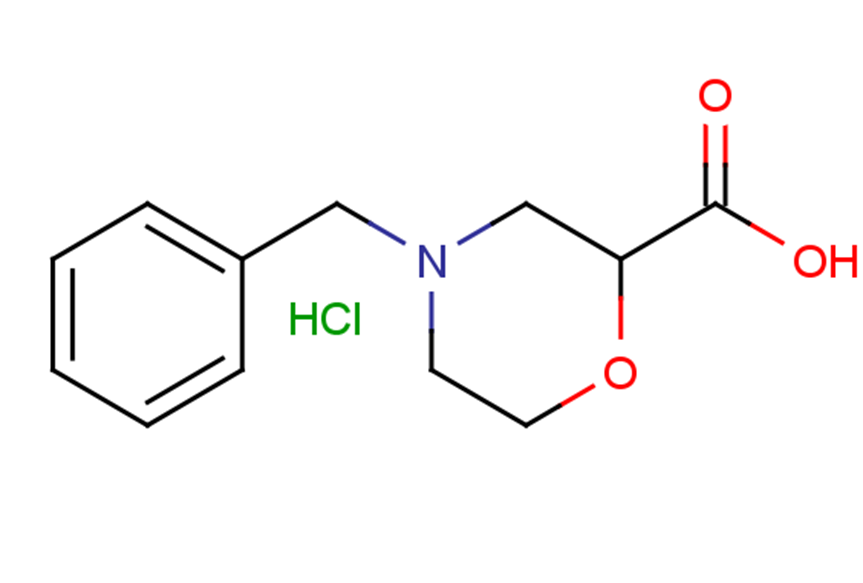
4-Benzyl-2-carboxymorpholine hydrochloride
CAS No. 135072-15-0
4-Benzyl-2-carboxymorpholine hydrochloride( —— )
Catalog No. M21939 CAS No. 135072-15-0
4-Benzyl-2-carboxymorpholine hydrochloride is a specialty product for proteomics research applications.
Purity : >98% (HPLC)
 COA
Datasheet
HNMR
HPLC
MSDS
Handing Instructions
COA
Datasheet
HNMR
HPLC
MSDS
Handing Instructions
| Size | Price / USD | Stock | Quantity |
| 1 mL x 10 mM in DMSO | 28 | In Stock |


|
| 10MG | 29 | In Stock |
|
| 25MG | 51 | In Stock |
|
| 50MG | 75 | In Stock |
|
| 100MG | 112 | In Stock |
|
| 200MG | Get Quote | In Stock |
|
| 500MG | 276 | In Stock |
|
| 1G | Get Quote | In Stock |
|
Biological Information
-
Product Name4-Benzyl-2-carboxymorpholine hydrochloride
-
NoteResearch use only, not for human use.
-
Brief Description4-Benzyl-2-carboxymorpholine hydrochloride is a specialty product for proteomics research applications.
-
Description4-Benzyl-2-carboxymorpholine hydrochloride is a specialty product for proteomics research applications.
-
In Vitro——
-
In Vivo——
-
Synonyms——
-
PathwayOthers
-
TargetOther Targets
-
RecptorOthers
-
Research Area——
-
Indication——
Chemical Information
-
CAS Number135072-15-0
-
Formula Weight257.71
-
Molecular FormulaC12H16ClNO3
-
Purity>98% (HPLC)
-
Solubility——
-
SMILESCl.OC(=O)C1CN(Cc2ccccc2)CCO1
-
Chemical Name——
Shipping & Storage Information
-
Storage(-20℃)
-
ShippingWith Ice Pack
-
Stability≥ 2 years
Reference
molnova catalog



related products
-
Amylin (8-37) (human...
Amylin (8-37), human is a fragment of human Amylin. Amylin (8-37), human has direct vasodilator effects in the isolated mesenteric resistance artery of the rat. Human Amylin is a small hormone secreted by pancreatic β-cells that forms aggregates under insulin deficiency metabolic conditions, and it constitutes a pathological hallmark of type II diabetes mellitus.
-
7-Epikadsurenone
(±)-7-epi-Kadsurenone is a novel lignan with hydrobenzofuran and bicyclic [3.2.1] octane. .
-
Amifostine trihydrat...
Amifostine is the first approved radioprotective drug, used to decrease the risk of kidney problems caused by treatment with cisplatin.
