


 Cart
Cart
 sales@molnova.com


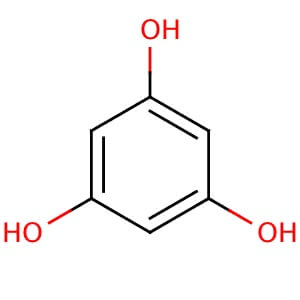
Phloroglucinol
CAS No. 108-73-6
Phloroglucinol ( —— )
Catalog No. M21843 CAS No. 108-73-6
Phloroglucinol is a hygroscopic biochemical that is also potentially useful for bone decalcification in microscopy specimens or the detection of wood fibers.
Purity : >98% (HPLC)
 COA
Datasheet
HNMR
HPLC
MSDS
Handing Instructions
COA
Datasheet
HNMR
HPLC
MSDS
Handing Instructions
| Size | Price / USD | Stock | Quantity |
| 100MG | Get Quote | In Stock |


|
| 200MG | Get Quote | In Stock |
|
| 500MG | Get Quote | In Stock |
|
| 1G | Get Quote | In Stock |
|
Biological Information
-
Product NamePhloroglucinol
-
NoteResearch use only, not for human use.
-
Brief DescriptionPhloroglucinol is a hygroscopic biochemical that is also potentially useful for bone decalcification in microscopy specimens or the detection of wood fibers.
-
DescriptionPhloroglucinol is a hygroscopic biochemical that is also potentially useful for bone decalcification in microscopy specimens or the detection of wood fibers.
-
In Vitro——
-
In Vivo——
-
Synonyms——
-
PathwayOthers
-
TargetOther Targets
-
Recptor——
-
Research Area——
-
Indication——
Chemical Information
-
CAS Number108-73-6
-
Formula Weight126.11
-
Molecular FormulaC6H6O3
-
Purity>98% (HPLC)
-
Solubility——
-
SMILESC1=C(C=C(C=C1O)O)O
-
Chemical Name——
Shipping & Storage Information
-
Storage(-20℃)
-
ShippingWith Ice Pack
-
Stability≥ 2 years
Reference
molnova catalog



related products
-
Sinapaldehyde
Sinapaldehyde has effects against 65 strains of Candida,Sinapaldehyde inhibits prostaglandin synthetase in a dose-dependent way, it dose-dependently inhibits ethyl phenylpropiolate-induced edema of the rat ear, and can inhibit electrically induced contractions of the guinea pig ileum in a dose-dependent way.
-
threo-7,9,9-Trihydro...
The herbs of Leucaena leucocephala.
-
Urocortin III, mouse...
Urocortin III, mouse TFA is a corticotropin-releasing factor (CRF)-related peptide. Urocortin III preferentially binds and activates CRF-R2. Urocortin III (Ucn3) is a known component of the behavioral stress response system. Urocortin III and CRF-R2 in the medial amygdala regulate complex social dynamics.
