


 Cart
Cart
 sales@molnova.com


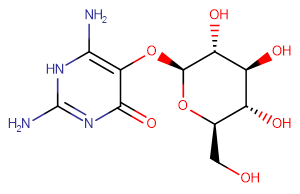
Vicine
CAS No. 152-93-2
Vicine( —— )
Catalog No. M21486 CAS No. 152-93-2
Vicine an alkaloid found in fava beans is toxic in individuals and may cause haemolytic anaemia.
Purity : >98% (HPLC)
 COA
Datasheet
HNMR
HPLC
MSDS
Handing Instructions
COA
Datasheet
HNMR
HPLC
MSDS
Handing Instructions
| Size | Price / USD | Stock | Quantity |
| 1 mL x 10 mM in DMSO | 125 | In Stock |


|
| 5MG | 116 | In Stock |
|
| 10MG | 187 | In Stock |
|
| 25MG | 312 | In Stock |
|
| 50MG | 455 | In Stock |
|
| 100MG | Get Quote | In Stock |
|
| 200MG | Get Quote | In Stock |
|
| 500MG | Get Quote | In Stock |
|
| 1G | Get Quote | In Stock |
|
Biological Information
-
Product NameVicine
-
NoteResearch use only, not for human use.
-
Brief DescriptionVicine an alkaloid found in fava beans is toxic in individuals and may cause haemolytic anaemia.
-
DescriptionVicine an alkaloid found in fava beans is toxic in individuals and may cause haemolytic anaemia.
-
In Vitro——
-
In Vivo——
-
Synonyms——
-
PathwayOthers
-
TargetOther Targets
-
RecptorOthers
-
Research Area——
-
Indication——
Chemical Information
-
CAS Number152-93-2
-
Formula Weight304.26
-
Molecular FormulaC10H16N4O7
-
Purity>98% (HPLC)
-
SolubilityIn Vitro:?DMSO : 50 mg/mL (164.33 mM)
-
SMILESNC(NC(N)=NC1=O)=C1O[C@@H]([C@@H]([C@H]1O)O)O[C@H](CO)[C@H]1O
-
Chemical Name——
Shipping & Storage Information
-
Storage(-20℃)
-
ShippingWith Ice Pack
-
Stability≥ 2 years
Reference
1.Farran MT et al. Vicine and convicine in common vetch (Vicia sativa) seeds enhance beta-cyanoalanine toxicity in male broiler chicks. Int J Toxicol. 2002 May-Jun;21(3):201-9.
molnova catalog



related products
-
Naringenin
Naringenin is a flavanone that is considered to have a bioactive effect on human health as antioxidant, free radical scavenger, antiinflammatory, carbohydrate metabolism promoter, immunity system modulater. This substance has also been shown to repair DNA.
-
A2ti-2
A2ti-2 is a low affinity and selective inhibitor of the membrane-bound protein A2/S100A10 heterotetramer (A2t) (IC50 : 230 μM).
-
Gypenoside LI
Gypenoside LI possesses non-small cell lung carcinoma A549 cell inhibitory activity.
