


 Cart
Cart
 sales@molnova.com


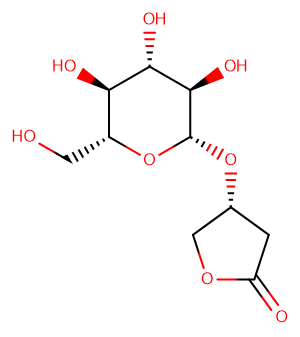
Kinsenoside;(+)-Kinsenoside
CAS No. 151870-74-5
Kinsenoside;(+)-Kinsenoside( —— )
Catalog No. M21441 CAS No. 151870-74-5
Kinsenoside shows significant antihepatotoxic and anti-inflammatory activities. Kinsenoside could be useful for repairing beta cells in pancreatic islet injury as well as improving its function it could promote the glucose tolerance of acute glucose increase in both diabetic and normal healthy rats.
Purity : >98% (HPLC)
 COA
Datasheet
HNMR
HPLC
MSDS
Handing Instructions
COA
Datasheet
HNMR
HPLC
MSDS
Handing Instructions
| Size | Price / USD | Stock | Quantity |
| 1 mL x 10 mM in DMSO | 139 | In Stock |


|
| 5MG | 144 | In Stock |
|
| 10MG | 231 | In Stock |
|
| 25MG | 392 | In Stock |
|
| 50MG | 538 | In Stock |
|
| 100MG | 737 | In Stock |
|
| 200MG | Get Quote | In Stock |
|
| 500MG | Get Quote | In Stock |
|
| 1G | Get Quote | In Stock |
|
Biological Information
-
Product NameKinsenoside;(+)-Kinsenoside
-
NoteResearch use only, not for human use.
-
Brief DescriptionKinsenoside shows significant antihepatotoxic and anti-inflammatory activities. Kinsenoside could be useful for repairing beta cells in pancreatic islet injury as well as improving its function it could promote the glucose tolerance of acute glucose increase in both diabetic and normal healthy rats.
-
DescriptionKinsenoside shows significant antihepatotoxic and anti-inflammatory activities. Kinsenoside could be useful for repairing beta cells in pancreatic islet injury as well as improving its function it could promote the glucose tolerance of acute glucose increase in both diabetic and normal healthy rats. Kinsenoside inhibits osteoclastogenesis from macrophages by attenuating RANKL-induced NF-κB and NFATc1 activities which in turn prevents bone loss from OVX mice.
-
In Vitro——
-
In Vivo——
-
Synonyms——
-
PathwayApoptosis
-
TargetApoptosis
-
RecptorApoptosis
-
Research Area——
-
Indication——
Chemical Information
-
CAS Number151870-74-5
-
Formula Weight264.23
-
Molecular FormulaC10H16O8
-
Purity>98% (HPLC)
-
SolubilityDMSO:16mg/ml(60.55mM)
-
SMILESOC[C@H]([C@H]([C@@H]([C@H]1O)O)O)O[C@H]1O[C@H](C1)COC1=O
-
Chemical Name2(3H)-Furanone 4-(.beta.-D-glucopyranosyloxy)dihydro- (R)-
Shipping & Storage Information
-
Storage(-20℃)
-
ShippingWith Ice Pack
-
Stability≥ 2 years
Reference
1.Zhang Y Cai J Ruan H et al. Antihyperglycemic activity of kinsenoside a high yielding constituent from Anoectochilus roxburghii in streptozotocin diabetic rats[J]. Journal of Ethnopharmacology 2007 114(2):0-145.
molnova catalog



related products
-
Stearoylethanolamide
Stearoylethanolamide(N-(2-Hydroxyethyl)octadecanamide) is a cannabinoid compound present in the brains of humans, rats, and mice with pro-apoptotic activity.
-
Flurochloridone
Flurochloridone is a selective herbicide. Flurochloridone induces apoptosis and is regulated by mitochondrial dysfunction and oxidative stresses.
-
Pamrevlumab
Pamrevlumab (FG-3019) is a human antibody with affinity for connective tissue growth factor (CTGF) and is involved in anti-CTGF therapy for the treatment of idiopathic pulmonary fibrosis (IPF).
