


 Cart
Cart
 sales@molnova.com


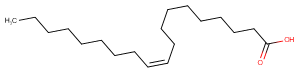
10Z-Nonadecenoic acid
CAS No. 73033-09-7
10Z-Nonadecenoic acid( —— )
Catalog No. M21426 CAS No. 73033-09-7
10Z-Nonadecenoic acid is a kind of long-chain fatty acid with anti-tumor activity.
Purity : >98% (HPLC)
 COA
Datasheet
HNMR
HPLC
MSDS
Handing Instructions
COA
Datasheet
HNMR
HPLC
MSDS
Handing Instructions
| Size | Price / USD | Stock | Quantity |
| 5MG | 41 | Get Quote |


|
| 10MG | 56 | Get Quote |
|
| 25MG | 89 | Get Quote |
|
| 50MG | 127 | Get Quote |
|
| 100MG | 182 | Get Quote |
|
| 200MG | Get Quote | Get Quote |
|
| 500MG | Get Quote | Get Quote |
|
| 1G | Get Quote | Get Quote |
|
Biological Information
-
Product Name10Z-Nonadecenoic acid
-
NoteResearch use only, not for human use.
-
Brief Description10Z-Nonadecenoic acid is a kind of long-chain fatty acid with anti-tumor activity.
-
Description10Z-Nonadecenoic acid is a kind of long-chain fatty acid with anti-tumor activity.
-
In Vitro10Z-Nonadecenoic acid is a kind of long-chain fatty acid with anti-tumor activity. 10Z-Nonadecenoic acid could also inhibit p53 activity.
-
In Vivo——
-
Synonyms——
-
PathwayProteasome/Ubiquitin
-
TargetEndogenous Metabolite
-
RecptorHuman Endogenous Metabolite
-
Research Area——
-
Indication——
Chemical Information
-
CAS Number73033-09-7
-
Formula Weight296.49
-
Molecular FormulaC19H36O2
-
Purity>98% (HPLC)
-
SolubilityDMSO:30mg/ml(101.18mM)
-
SMILESCCCCCCCC/C=C\CCCCCCCCC(O)=O
-
Chemical Name——
Shipping & Storage Information
-
Storage(-20℃)
-
ShippingWith Ice Pack
-
Stability≥ 2 years
Reference



-
N-Acetyl-L-alanine
N-Acetyl-L-alanine is a substrate for Guanine nucleotide-binding protein G(I)/G(S)/G(O) gamma-2 subunit Myelin basic protein GTP-binding nuclear protein Ran Tropomyosin alpha 4 chain HIV-1 Rev binding protein 2 Xaa-Pro dipeptidase Thymosin beta-10 Actin-like protein 3 Alanine aminotransferase Serine/threonine protein phosphatase PP1-beta catalytic subunit 10 kDa heat shock protein (mitochondrial) Calmodulin and Beta-1-syntrophin.
-
Pseudouridine
Pseudouridine is the most abundant modified nucleoside in non-coding RNAs. It enhances the function of transfer RNA and ribosomal RNA by stabilizing RNA structure.
-
5'-Guanylic acid
5'-Guanylic acid is involved in several metabolic disorders, including AICA-ribosiduria pathway, ?adenosine deaminase deficiency,adenine phosphoribosyltransferase deficiency (aprt), and the 2-hydroxyglutric aciduria pathway.
