


 Cart
Cart
 sales@molnova.com


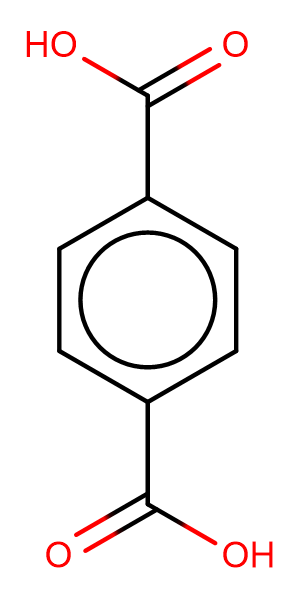
Terephthalic acid
CAS No. 100-21-0
Terephthalic acid( —— )
Catalog No. M21387 CAS No. 100-21-0
Terephthalic acid is one isomer of the three phthalic a precursor to the polyester PET used to make clothing and plastic bottles.
Purity : >98% (HPLC)
 COA
Datasheet
HNMR
HPLC
MSDS
Handing Instructions
COA
Datasheet
HNMR
HPLC
MSDS
Handing Instructions
| Size | Price / USD | Stock | Quantity |
| 1 mL x 10 mM in DMSO | 42 | In Stock |


|
| 100MG | Get Quote | In Stock |
|
| 200MG | Get Quote | In Stock |
|
| 500MG | 38 | In Stock |
|
| 1G | Get Quote | In Stock |
|
Biological Information
-
Product NameTerephthalic acid
-
NoteResearch use only, not for human use.
-
Brief DescriptionTerephthalic acid is one isomer of the three phthalic a precursor to the polyester PET used to make clothing and plastic bottles.
-
DescriptionTerephthalic acid is one isomer of the three phthalic a precursor to the polyester PET used to make clothing and plastic bottles.
-
In Vitro——
-
In Vivo——
-
Synonyms——
-
PathwayOthers
-
TargetOther Targets
-
RecptorOthers
-
Research Area——
-
Indication——
Chemical Information
-
CAS Number100-21-0
-
Formula Weight166.13
-
Molecular FormulaC8H6O4
-
Purity>98% (HPLC)
-
SolubilityDMSO:33 mg/mL (198.63 mM)
-
SMILESOC(=O)c1ccc(cc1)C(O)=O
-
Chemical Name——
Shipping & Storage Information
-
Storage(-20℃)
-
ShippingWith Ice Pack
-
Stability≥ 2 years
Reference
1.Heck HD et al. The induction of bladder stones by terephthalic acid dimethyl terephthalate and melamine (246-triamino-s-triazine) and its relevance to risk assessment. Regul Toxicol Pharmacol. 1985 Sep;5(3):294-313.
molnova catalog



related products
-
2,4′-Dichloroacetani...
2,4′-Dichloroacetanilide (2-chloro-N-(4-chlorophenyl)acetamide) has antifungal activity and inhibits T. asteroides with a minimum inhibitory concentration (MIC) of 6.25 μg/mL.
-
Histrelin
Histrelin acetate is a nonapeptide analog of gonadotropin-releasing hormone (GnRH) with added potency.
-
Mukonine
Mukonine
