


 Cart
Cart
 sales@molnova.com


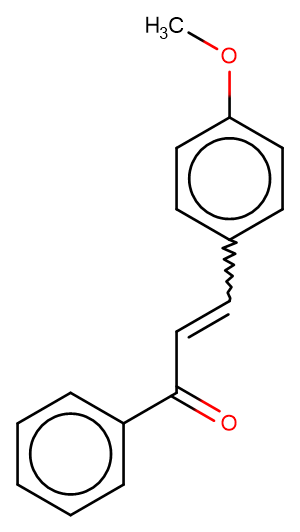
4-METHOXYCHALCONE
CAS No. 959-33-1
4-METHOXYCHALCONE( 2-(4-Methoxybenzal)Acetophenone )
Catalog No. M21325 CAS No. 959-33-1
4-METHOXYCHALCONE is a natural compound that enhanced adipocyte differentiation.
Purity : >98% (HPLC)
 COA
Datasheet
HNMR
HPLC
MSDS
Handing Instructions
COA
Datasheet
HNMR
HPLC
MSDS
Handing Instructions
| Size | Price / USD | Stock | Quantity |
| 1 mL x 10 mM in DMSO | 28 | In Stock |


|
| 100MG | Get Quote | In Stock |
|
| 200MG | Get Quote | In Stock |
|
| 500MG | Get Quote | In Stock |
|
| 1G | 27 | In Stock |
|
Biological Information
-
Product Name4-METHOXYCHALCONE
-
NoteResearch use only, not for human use.
-
Brief Description4-METHOXYCHALCONE is a natural compound that enhanced adipocyte differentiation.
-
Description4-METHOXYCHALCONE is a natural compound that enhanced adipocyte differentiation.
-
In Vitro——
-
In Vivo——
-
Synonyms2-(4-Methoxybenzal)Acetophenone
-
PathwayOthers
-
TargetOther Targets
-
RecptorOthers
-
Research Area——
-
Indication——
Chemical Information
-
CAS Number959-33-1
-
Formula Weight238.28
-
Molecular FormulaC16H14O2
-
Purity>98% (HPLC)
-
Solubility——
-
SMILESCOc1ccc(C=CC(c2ccccc2)=O)cc1
-
Chemical Name——
Shipping & Storage Information
-
Storage(-20℃)
-
ShippingWith Ice Pack
-
Stability≥ 2 years
Reference
1.Younho Han Sung et al. Regulatory effects of 4-methoxychalcone on adipocyte differentiation through PPARγ activation and reverse effect on TNF-α in 3T3-L1 cells[J]. Food & Chemical Toxicology 2017.
molnova catalog



related products
-
266-Trimethyl-24-cyc...
266-Trimethyl-24-cycloheptadien-1-one is a chemical compound.
-
Eflucimibe
Eflucimibe (L0081) is an acyl coenzyme A: cholesterol acyltransferase inhibitor for the treatment of cardiovascular disease and endocrine and metabolic disorders, and can be used to study atherosclerosis and hyperlipidemia.
-
Mal-PEG5-Boc
Mal-PEG5-Boc is a PEG-based PROTAC linker that can be used in the synthesis of PROTACs.
