


 Cart
Cart
 sales@molnova.com


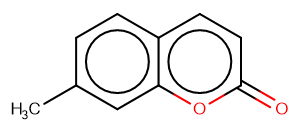
7-Methylcoumarin
CAS No. 2445-83-2
7-Methylcoumarin( —— )
Catalog No. M21242 CAS No. 2445-83-2
7-Methylcoumarin with strong hepatoprotective activity.
Purity : >98% (HPLC)
 COA
Datasheet
HNMR
HPLC
MSDS
Handing Instructions
COA
Datasheet
HNMR
HPLC
MSDS
Handing Instructions
| Size | Price / USD | Stock | Quantity |
| 1 mL x 10 mM in DMSO | 28 | In Stock |


|
| 100MG | 27 | In Stock |
|
| 200MG | Get Quote | In Stock |
|
| 500MG | Get Quote | In Stock |
|
| 1G | Get Quote | In Stock |
|
Biological Information
-
Product Name7-Methylcoumarin
-
NoteResearch use only, not for human use.
-
Brief Description7-Methylcoumarin with strong hepatoprotective activity.
-
Description7-Methylcoumarin with strong hepatoprotective activity.
-
In Vitro——
-
In Vivo——
-
Synonyms——
-
PathwayOthers
-
TargetOther Targets
-
RecptorOthers
-
Research Area——
-
Indication——
Chemical Information
-
CAS Number2445-83-2
-
Formula Weight160.17
-
Molecular FormulaC10H8O2
-
Purity>98% (HPLC)
-
SolubilityIn Vitro:?DMSO : 100 mg/mL (624.34 mM)
-
SMILESCc1ccc2ccc(=O)oc2c1
-
Chemical Name——
Shipping & Storage Information
-
Storage(-20℃)
-
ShippingWith Ice Pack
-
Stability≥ 2 years
Reference
1.Sancheti S Sancheti S Seo S Y . Ameliorative effects of 7-methylcoumarin and 7-methoxycoumarin against CCl4-induced hepatotoxicity in rats[J]. Drug & Chemical Toxicology 2013 36(1):42-47.
molnova catalog



related products
-
Usaramine
Usaramine demonstrates phytotoxicity against Lactuca sativa var. Carrascoy (lettuce) assessed as inhibition of seed germination at 50 ug/cm2 after 24 hr.
-
Orobanchyl acetate
Orobanchyl acetate, a natural strigolactone, is a germination stimulant for root parasitic plants.
-
Eupatorin-5-methylet...
Eupatorin-5-methylether is a natural product for research related to life sciences.
