


 Cart
Cart
 sales@molnova.com


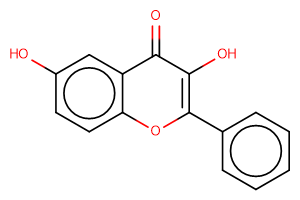
36-Dihydroxyflavone
CAS No. 108238-41-1
36-Dihydroxyflavone( —— )
Catalog No. M21213 CAS No. 108238-41-1
36-Dihydroxyflavone suppresses the epithelial-mesenchymal transition in breast cancer cells by inhibiting the Notch signaling pathway.
Purity : >98% (HPLC)
 COA
Datasheet
HNMR
HPLC
MSDS
Handing Instructions
COA
Datasheet
HNMR
HPLC
MSDS
Handing Instructions
| Size | Price / USD | Stock | Quantity |
| 1 mL x 10 mM in DMSO | 37 | In Stock |


|
| 10MG | 29 | In Stock |
|
| 25MG | 56 | In Stock |
|
| 50MG | 84 | In Stock |
|
| 100MG | 126 | In Stock |
|
| 200MG | 182 | In Stock |
|
| 500MG | Get Quote | In Stock |
|
| 1G | Get Quote | In Stock |
|
Biological Information
-
Product Name36-Dihydroxyflavone
-
NoteResearch use only, not for human use.
-
Brief Description36-Dihydroxyflavone suppresses the epithelial-mesenchymal transition in breast cancer cells by inhibiting the Notch signaling pathway.
-
Description36-Dihydroxyflavone suppresses the epithelial-mesenchymal transition in breast cancer cells by inhibiting the Notch signaling pathway.
-
In Vitro——
-
In Vivo——
-
Synonyms——
-
PathwayOthers
-
TargetOther Targets
-
RecptorOthers
-
Research Area——
-
Indication——
Chemical Information
-
CAS Number108238-41-1
-
Formula Weight254.24
-
Molecular FormulaC15H10O4
-
Purity>98% (HPLC)
-
SolubilityIn Vitro:?DMSO : 66.67 mg/mL (262.23 mM)
-
SMILESOc(cc1)cc(C2=O)c1OC(c1ccccc1)=C2O
-
Chemical Name——
Shipping & Storage Information
-
Storage(-20℃)
-
ShippingWith Ice Pack
-
Stability≥ 2 years
Reference
1.Chen J Chang H Peng X et al. 36-dihydroxyflavone suppresses the epithelial-mesenchymal transition in breast cancer cells by inhibiting the Notch signaling pathway[J]. Scientific Reports 2016 6:28858.
molnova catalog



related products
-
Chlortalidone
Chlorthalidone is a thiazide-like diuretic used to treat hypertension.
-
ESCULETINDIACETATE
ESCULETINDIACETATE
-
Indicolactone
Wampetin is a useful organic compound for research related to life sciences.
