


 Cart
Cart
 sales@molnova.com


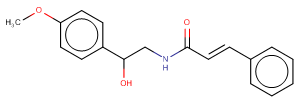
Aegeline
CAS No. 456-12-2
Aegeline( —— )
Catalog No. M21098 CAS No. 456-12-2
Aegeline is an alkaloidal-amide isolated from the leaves of Aegle marmelos and have shown antihyperglycemic as well as antidyslipidemic activities in the validated animal models of type 2 diabetes mellitus.
Purity : >98% (HPLC)
 COA
Datasheet
HNMR
HPLC
MSDS
Handing Instructions
COA
Datasheet
HNMR
HPLC
MSDS
Handing Instructions
| Size | Price / USD | Stock | Quantity |
| 1 mL x 10 mM in DMSO | 28 | In Stock |


|
| 100MG | Get Quote | In Stock |
|
| 200MG | Get Quote | In Stock |
|
| 500MG | Get Quote | In Stock |
|
| 1G | 29 | In Stock |
|
Biological Information
-
Product NameAegeline
-
NoteResearch use only, not for human use.
-
Brief DescriptionAegeline is an alkaloidal-amide isolated from the leaves of Aegle marmelos and have shown antihyperglycemic as well as antidyslipidemic activities in the validated animal models of type 2 diabetes mellitus.
-
DescriptionAegeline is an alkaloidal-amide isolated from the leaves of Aegle marmelos and have shown antihyperglycemic as well as antidyslipidemic activities in the validated animal models of type 2 diabetes mellitus.
-
In VitroAegeline also prevents growth block in cells expressing the more toxic A53T α-synuclein mutant. Restoration of cell growth occurred through inhibition of increased ROS levels, mitochondrial membrane potential loss and nuclear DNA fragmentation, characteristics of apoptosis manifested in α-synuclein or Bax-expressing cells.Aegeline shows weak inhibitory effects on the histamine release from RPMCs, even though still succeed to inhibit when the histamine release induced by thapsigargin.
-
In Vivo——
-
Synonyms——
-
PathwayOthers
-
TargetOther Targets
-
RecptorOthers
-
Research Area——
-
Indication——
Chemical Information
-
CAS Number456-12-2
-
Formula Weight297.3
-
Molecular FormulaC18H19NO3
-
Purity>98% (HPLC)
-
SolubilityIn Vitro:?DMSO : 100 mg/mL (336.30 mM)
-
SMILESCOc1ccc(C(O)CNC(=O)/C=C/c2ccccc2)cc1
-
Chemical NameN-[2-hydroxy-2(4-methoxyphenyl) ethyl]-3-phenyl-2-propenamide
Shipping & Storage Information
-
Storage(-20℃)
-
ShippingWith Ice Pack
-
Stability≥ 2 years
Reference
1.Aegeline from Aegle marmelos stimulates glucose transport via Akt and Rac1 signaling and contributes to a cytoskeletal rearrangement through PI3K/Rac1[J]. European Journal of Pharmacology 2015 762:419-429.
molnova catalog



related products
-
[Phe17] - Apelin 17
[Phe17] - Apelin 17
-
Cinaciguat
Cinaciguat (BAY 58-2667) is the first of a new class of soluble guanylate cyclase (sGC) activators in clinical development for acute decompensated heart failure.
-
Dihydronitidine
Dihydronitidine is an alkaloid can be extracted from Zanthoxylum rhoifolium.
