


 Cart
Cart
 sales@molnova.com


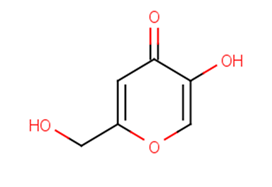
Kojic acid
CAS No. 501-30-4
Kojic acid( —— )
Catalog No. M20588 CAS No. 501-30-4
Kojic acid is a fungal metabolite that inhibits tyrosinase an enzyme involved in melanin synthesis with an IC50 value of 30.6 μM for mushroom tyrosinase.
Purity : >98% (HPLC)
 COA
Datasheet
HNMR
HPLC
MSDS
Handing Instructions
COA
Datasheet
HNMR
HPLC
MSDS
Handing Instructions
| Size | Price / USD | Stock | Quantity |
| 1 mL x 10 mM in DMSO | 41 | In Stock |


|
| 100MG | 37 | In Stock |
|
| 200MG | Get Quote | In Stock |
|
| 500MG | Get Quote | In Stock |
|
| 1G | Get Quote | In Stock |
|
Biological Information
-
Product NameKojic acid
-
NoteResearch use only, not for human use.
-
Brief DescriptionKojic acid is a fungal metabolite that inhibits tyrosinase an enzyme involved in melanin synthesis with an IC50 value of 30.6 μM for mushroom tyrosinase.
-
DescriptionKojic acid is a fungal metabolite that inhibits tyrosinase an enzyme involved in melanin synthesis with an IC50 value of 30.6 μM for mushroom tyrosinase.
-
In Vitro——
-
In Vivo——
-
Synonyms——
-
PathwayOthers
-
TargetOther Targets
-
RecptorOthers
-
Research Area——
-
Indication——
Chemical Information
-
CAS Number501-30-4
-
Formula Weight142.11
-
Molecular FormulaC6H6O4
-
Purity>98% (HPLC)
-
SolubilityDMSO:28 mg/mL (197.03 mM)
-
SMILESOCc1cc(=O)c(O)co1
-
Chemical Name5-Hydroxy-2-(hydroxymethyl)-4H-pyran-4-one
Shipping & Storage Information
-
Storage(-20℃)
-
ShippingWith Ice Pack
-
Stability≥ 2 years
Reference
1.Rodrigues A P D Farias L H S Carvalho Antonio Sérgio C et al. A Novel Function for Kojic Acid a Secondary Metabolite from Aspergillus Fungi as Antileishmanial Agent[J]. PLoS ONE 2014 9(3):e91259-.
molnova catalog



related products
-
Geranyl?Tiglate
Geranium oil is one of the most important natural perfume.
-
Alizarin Red S sodiu...
Alizarin Red S sodium (ARS sodium) is an anthraquinone dye. Which has been widely used to evaluate calcium deposits in cell culture.
-
Oxyresveratrol-4,3,5...
Oxyresveratrol-4,3',5'-tri-O-β-D-glucopyranoside
