


 Cart
Cart
 sales@molnova.com


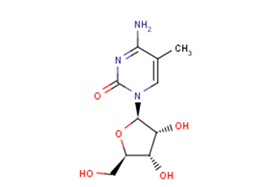
5-Methylcytidine
CAS No. 2140-61-6
5-Methylcytidine( —— )
Catalog No. M20559 CAS No. 2140-61-6
5-Methylcytidine is a modified nucleoside derived from 5-methylcytosine and is a minor constituent of RNA as well as DNA for certain organisms.
Purity : >98% (HPLC)
 COA
Datasheet
HNMR
HPLC
MSDS
Handing Instructions
COA
Datasheet
HNMR
HPLC
MSDS
Handing Instructions
| Size | Price / USD | Stock | Quantity |
| 1 mL x 10 mM in DMSO | 50 | In Stock |


|
| 25MG | 32 | In Stock |
|
| 50MG | 45 | In Stock |
|
| 100MG | 63 | In Stock |
|
| 200MG | Get Quote | In Stock |
|
| 500MG | 133 | In Stock |
|
| 1G | 193 | In Stock |
|
Biological Information
-
Product Name5-Methylcytidine
-
NoteResearch use only, not for human use.
-
Brief Description5-Methylcytidine is a modified nucleoside derived from 5-methylcytosine and is a minor constituent of RNA as well as DNA for certain organisms.
-
Description5-Methylcytidine is a modified nucleoside derived from 5-methylcytosine and is a minor constituent of RNA as well as DNA for certain organisms.
-
In Vitro——
-
In Vivo——
-
Synonyms——
-
PathwayProteasome/Ubiquitin
-
TargetEndogenous Metabolite
-
RecptorHuman Endogenous Metabolite
-
Research Area——
-
Indication——
Chemical Information
-
CAS Number2140-61-6
-
Formula Weight257.24
-
Molecular FormulaC10H15N3O5
-
Purity>98% (HPLC)
-
SolubilityDMSO:51 mg/mL (198.25 mM)
-
SMILESCc1cn([C@@H]2O[C@H](CO)[C@@H](O)[C@H]2O)c(=O)nc1N
-
Chemical Name——
Shipping & Storage Information
-
Storage(-20℃)
-
ShippingWith Ice Pack
-
Stability≥ 2 years
Reference
1.Transcriptome-wide?mapping?of?5-methylcytidine?RNA?modifications?in?bacteria?archaea and?yeast?reveals?m5C?within?archaeal?mRNAs.
molnova catalog



related products
-
p-Cresyl sulfate pot...
p-Methylphenyl potassium sulfate is a prototype protein-bound uremic toxin derived from the metabolites of tyrosine and phenylalanine through liver.
-
Carveol
(-)-Carveol, mixture of isomers is a monocyclic monoterpenic alcohol, present in essential oils of plant species such as Cymbopogon giganteus, Illicium pachyphyllum and in spices such as Carum carvi (cumin).
-
N-Methyl-DL-glutamic...
2-(Methylamino)pentanedioic acid (N-Methyl-DL-glutamic acid) is an endogenous metabolite that inhibits Glutaminase, adds freshness to edible products, and can be used in tuberculosis research.
