


 Cart
Cart
 sales@molnova.com


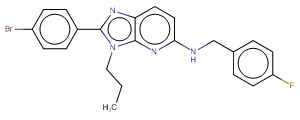
SJA710-6
CAS No. 1397255-09-2
SJA710-6( —— )
Catalog No. M20325 CAS No. 1397255-09-2
SJA710-6 is a small molecule able to selectively differentiate MSCs toward hepatocyte-like cells.
Purity : >98% (HPLC)
 COA
Datasheet
HNMR
HPLC
MSDS
Handing Instructions
COA
Datasheet
HNMR
HPLC
MSDS
Handing Instructions
| Size | Price / USD | Stock | Quantity |
| 1 mL x 10 mM in DMSO | 28 | In Stock |


|
| 25MG | 51 | In Stock |
|
| 50MG | 84 | In Stock |
|
| 100MG | 136 | In Stock |
|
| 200MG | Get Quote | In Stock |
|
| 500MG | Get Quote | In Stock |
|
| 1G | Get Quote | In Stock |
|
Biological Information
-
Product NameSJA710-6
-
NoteResearch use only, not for human use.
-
Brief DescriptionSJA710-6 is a small molecule able to selectively differentiate MSCs toward hepatocyte-like cells.
-
DescriptionSJA710-6 is a small molecule able to selectively differentiate MSCs toward hepatocyte-like cells.
-
In Vitro——
-
In Vivo——
-
Synonyms——
-
PathwayOthers
-
TargetOther Targets
-
RecptorOthers
-
Research Area——
-
Indication——
Chemical Information
-
CAS Number1397255-09-2
-
Formula Weight439.32
-
Molecular FormulaC22H20BrFN4
-
Purity>98% (HPLC)
-
SolubilityDMSO:250 mg/mL?(569.06 mM)
-
SMILESCCCn1c(nc2ccc(NCc3ccc(F)cc3)nc12)-c1ccc(Br)cc1
-
Chemical Name——
Shipping & Storage Information
-
Storage(-20℃)
-
ShippingWith Ice Pack
-
Stability≥ 2 years
Reference
1.Hepatic Differentiation of Rat Mesenchymal Stem Cells by a Small Molecule[J]. Chemmedchem 2012 7(8):1447–1452.
molnova catalog



related products
-
EGF Receptor Substra...
EGF Receptor Substrate 1
-
HIV-gp41-Antigenic P...
HIV-gp41-Antigenic Peptide 5
-
YK-4-279
YK 4-279, an inhibitor of RNA Helicase A (RHA), binds to the oncogenic transciption factor EWS-FLI1.
