


 Cart
Cart
 sales@molnova.com


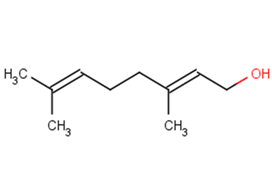
Geraniol
CAS No. 106-24-1
Geraniol( —— )
Catalog No. M20315 CAS No. 106-24-1
geraniol provides a potent protective effect against cardiac dysfunction induced by diabetes. This ameliorative effect could be attributed to its suppression of oxidative stress.
Purity : >98% (HPLC)
 COA
Datasheet
HNMR
HPLC
MSDS
Handing Instructions
COA
Datasheet
HNMR
HPLC
MSDS
Handing Instructions
| Size | Price / USD | Stock | Quantity |
| 1 mL x 10 mM in DMSO | 48 | In Stock |


|
| 100MG | 43 | In Stock |
|
| 200MG | Get Quote | In Stock |
|
| 500MG | Get Quote | In Stock |
|
| 1G | Get Quote | In Stock |
|
Biological Information
-
Product NameGeraniol
-
NoteResearch use only, not for human use.
-
Brief Descriptiongeraniol provides a potent protective effect against cardiac dysfunction induced by diabetes. This ameliorative effect could be attributed to its suppression of oxidative stress.
-
Descriptiongeraniol provides a potent protective effect against cardiac dysfunction induced by diabetes. This ameliorative effect could be attributed to its suppression of oxidative stress.
-
In Vitro——
-
In Vivo——
-
Synonyms——
-
PathwayOthers
-
TargetOther Targets
-
RecptorOthers
-
Research Area——
-
Indication——
Chemical Information
-
CAS Number106-24-1
-
Formula Weight154.25
-
Molecular FormulaC10H18O
-
Purity>98% (HPLC)
-
Solubility——
-
SMILESC\C(C)=C\CC\C(C)=C\CO
-
Chemical Name26-Octadien-1-ol 37-dimethyl- (2E)-
Shipping & Storage Information
-
Storage(-20℃)
-
ShippingWith Ice Pack
-
Stability≥ 2 years
Reference
1.El-Bassossy HM Ghaleb H Elberry AA et al. Geraniol alleviates diabetic cardiac complications: Effect on cardiac ischemia and oxidative stress.Biomed Pharmacother[J]. 2017 Apr;88:1025-1030.
molnova catalog



related products
-
CCG 50014
CCG 50014 is a potent and selective inhibitor of RGS4 with IC50 of 30 nM.
-
1-Dehydro-6-gingerdi...
1-Dehydro-6-gingerdione is a 5-HT1A receptor partial agonist.
-
Homo-VK-II-36
Homo-VK-II-36 is a carvedilol analogue that acts by inhibiting store-?overload-induced calcium release through the RyR2 channel.
