


 Cart
Cart
 sales@molnova.com


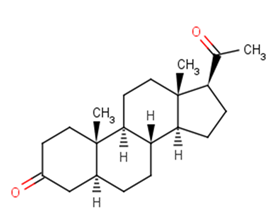
5a-Pregnane-320-dione
CAS No. 566-65-4
5a-Pregnane-320-dione( —— )
Catalog No. M20274 CAS No. 566-65-4
5a-Pregnane-320-dione is a biologically active 5-alpha-reduced metabolite of plasma progesterone
Purity : >98% (HPLC)
 COA
Datasheet
HNMR
HPLC
MSDS
Handing Instructions
COA
Datasheet
HNMR
HPLC
MSDS
Handing Instructions
| Size | Price / USD | Stock | Quantity |
| 1 mL x 10 mM in DMSO | 29 | In Stock |


|
| 100MG | 27 | In Stock |
|
| 200MG | Get Quote | In Stock |
|
| 500MG | 56 | In Stock |
|
| 1G | Get Quote | In Stock |
|
Biological Information
-
Product Name5a-Pregnane-320-dione
-
NoteResearch use only, not for human use.
-
Brief Description5a-Pregnane-320-dione is a biologically active 5-alpha-reduced metabolite of plasma progesterone
-
Description5a-Pregnane-320-dione is a biologically active 5-alpha-reduced metabolite of plasma progesterone.
-
In Vitro5a-Pregnane-3,20-dione decreases cell-substrate attachment, adhesion plaques, vinculin expression, and polymerizes F-actin in MCF-7 breast cancer cells.
-
In Vivo——
-
Synonyms——
-
PathwayProteasome/Ubiquitin
-
TargetEndogenous Metabolite
-
RecptorHuman Endogenous Metabolite
-
Research Area——
-
Indication——
Chemical Information
-
CAS Number566-65-4
-
Formula Weight316.48
-
Molecular FormulaC21H32O2
-
Purity>98% (HPLC)
-
SolubilityDMSO:5 mg/mL (15.80 mM; Need ultrasonic and warming)
-
SMILES[H][C@@]12CC[C@H](C(C)=O)[C@@]1(C)CC[C@@]1([H])[C@@]2([H])CC[C@@]2([H])CC(=O)CC[C@]12C
-
Chemical Name——
Shipping & Storage Information
-
Storage(-20℃)
-
ShippingWith Ice Pack
-
Stability≥ 2 years
Reference
1.Wiebe J P Muzia D . The endogenous progesterone metabolite 5a-pregnane-320-dione decreases cell-substrate attachment adhesion plaques vinculin expression and polymerized F-actin in MCF-7 breast cancer cells.[J]. Endocrine 2001 16(1):7-14.
molnova catalog



related products
-
L-(+)-Arabinose
L-(+)-Arabinose inhibits intestinal sucrase activity, thereby reducing sucrose utilization, and consequently decreasing lipogenesis.
-
L-Norleucine
L-Norleucine is an isomer of leucine specifically affects protein synthesis in skeletal muscle and has antivirus activity.
-
Cinnamoylglycine
Cinnamoylglycine is a glycine conjugate of cinnamic acid and a urinary metabolite in humans. It is used as a potential urinary biomarker.
