


 Cart
Cart
 sales@molnova.com


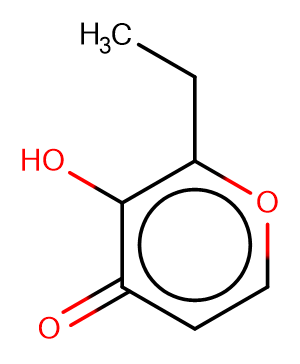
Ethyl maltol
CAS No. 4940-11-8
Ethyl maltol( 2-Ethyl pyromeconic acid | 2-Ethyl-3-hydroxy-4H-pyran-4-one )
Catalog No. M20268 CAS No. 4940-11-8
Ethyl Maltol is an extract from medicinal plants such as P. Incarnata and can be used as an anticonvulsant. It is also a common flavoring.
Purity : >98% (HPLC)
 COA
Datasheet
HNMR
HPLC
MSDS
Handing Instructions
COA
Datasheet
HNMR
HPLC
MSDS
Handing Instructions
| Size | Price / USD | Stock | Quantity |
| 100MG | Get Quote | In Stock |


|
| 200MG | Get Quote | In Stock |
|
| 500MG | Get Quote | In Stock |
|
| 1G | 27 | In Stock |
|
Biological Information
-
Product NameEthyl maltol
-
NoteResearch use only, not for human use.
-
Brief DescriptionEthyl Maltol is an extract from medicinal plants such as P. Incarnata and can be used as an anticonvulsant. It is also a common flavoring.
-
DescriptionEthyl Maltol is an extract from medicinal plants such as P. Incarnata and can be used as an anticonvulsant. It is also a common flavoring.
-
In Vitro——
-
In Vivo——
-
Synonyms2-Ethyl pyromeconic acid | 2-Ethyl-3-hydroxy-4H-pyran-4-one
-
PathwayOthers
-
TargetOther Targets
-
RecptorOthers
-
Research Area——
-
Indication——
Chemical Information
-
CAS Number4940-11-8
-
Formula Weight140.14
-
Molecular FormulaC7H8O3
-
Purity>98% (HPLC)
-
SolubilityDMSO: 25 mg/mL (178.39 mM)
-
SMILESCCc1occc(=O)c1O
-
Chemical Name——
Shipping & Storage Information
-
Storage(-20℃)
-
ShippingWith Ice Pack
-
Stability≥ 2 years
Reference
molnova catalog



related products
-
Simian Virus 40 Larg...
Simian Virus 40 Large Tumor Antigen Amino-Terminal Peptide
-
Carmine
Ponceau 4R is a synthetic strawberry red azo dye that is a food colorant dye used in a variety of food products.
-
urolithin M6
urolithin M6 (UM6) is an ellagitannin metabolite produced by gut microbiota, was identified as a putative galloflavin mimetic
