


 Cart
Cart
 sales@molnova.com


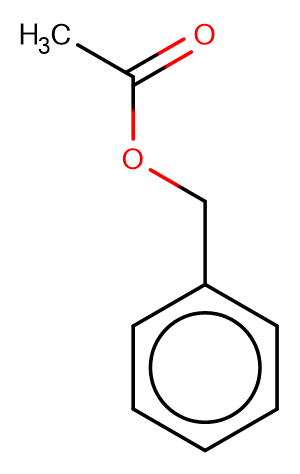
Benzyl acetate
CAS No. 140-11-4
Benzyl acetate( Phenylmethyl acetate | Benzyl ethanoate )
Catalog No. M20248 CAS No. 140-11-4
Benzyl acetate is a constituent of Jasmin and of the essential oils of ylang-ylang and neroli.
Purity : >98% (HPLC)
 COA
Datasheet
HNMR
HPLC
MSDS
Handing Instructions
COA
Datasheet
HNMR
HPLC
MSDS
Handing Instructions
| Size | Price / USD | Stock | Quantity |
| 1 mL x 10 mM in DMSO | 28 | In Stock |


|
| 25MG | 76 | In Stock |
|
| 100MG | Get Quote | In Stock |
|
| 200MG | Get Quote | In Stock |
|
| 500MG | Get Quote | In Stock |
|
| 1G | Get Quote | In Stock |
|
Biological Information
-
Product NameBenzyl acetate
-
NoteResearch use only, not for human use.
-
Brief DescriptionBenzyl acetate is a constituent of Jasmin and of the essential oils of ylang-ylang and neroli.
-
DescriptionBenzyl acetate is a constituent of Jasmin and of the essential oils of ylang-ylang and neroli.
-
In Vitro——
-
In Vivo——
-
SynonymsPhenylmethyl acetate | Benzyl ethanoate
-
PathwayOthers
-
TargetOther Targets
-
RecptorOthers
-
Research Area——
-
Indication——
Chemical Information
-
CAS Number140-11-4
-
Formula Weight150.18
-
Molecular FormulaC9H10O2
-
Purity>98% (HPLC)
-
SolubilityDMSO: Soluble
-
SMILESCC(=O)OCc1ccccc1
-
Chemical Name——
Shipping & Storage Information
-
Storage(-20℃)
-
ShippingWith Ice Pack
-
Stability≥ 2 years
Reference
molnova catalog



related products
-
2-Furoyl-LIGRLO-amid...
2-Furoyl-LIGRLO-amide is a potent and selective protease-activated receptor 2 (PAR2) agonist.
-
Sativanone
Sativanone has anti-inflammatory, anti-aging,anti Hyal-1 and antioxidant properties as well as antibacterial activity against Ralstonia solanacearum. Sativaone inhibits yeast alpha-glucosidase.
-
NS13001
NS13001 is a potent, selective, orally active allosteric positive modulator of SK channels (small conductance calcium-activated potassium channels).
