


 Cart
Cart
 sales@molnova.com


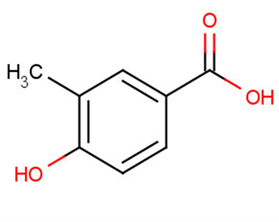
4-hydroxy-3-methylbenzoic acid
CAS No. 499-76-3
4-hydroxy-3-methylbenzoic acid( 43-Cresotic acid )
Catalog No. M20003 CAS No. 499-76-3
4-Hydroxy-3-methylbenzoic acid is a normal organic acid identified in urine specimens from a healthy population.
Purity : >98% (HPLC)
 COA
Datasheet
HNMR
HPLC
MSDS
Handing Instructions
COA
Datasheet
HNMR
HPLC
MSDS
Handing Instructions
| Size | Price / USD | Stock | Quantity |
| 1 mL x 10 mM in DMSO | 28 | In Stock |


|
| 100MG | Get Quote | In Stock |
|
| 200MG | Get Quote | In Stock |
|
| 500MG | Get Quote | In Stock |
|
| 1G | 27 | In Stock |
|
Biological Information
-
Product Name4-hydroxy-3-methylbenzoic acid
-
NoteResearch use only, not for human use.
-
Brief Description4-Hydroxy-3-methylbenzoic acid is a normal organic acid identified in urine specimens from a healthy population.
-
Description4-Hydroxy-3-methylbenzoic acid is a normal organic acid identified in urine specimens from a healthy population.
-
In Vitro4-Hydroxy-3-methylbenzoic acid was isolated as the product of oxidation of 2,4-xylenol by cells inhibited with alpha alpha'-bipyridyl.
-
In Vivo——
-
Synonyms43-Cresotic acid
-
PathwayOthers
-
TargetOther Targets
-
RecptorOthers
-
Research Area——
-
Indication——
Chemical Information
-
CAS Number499-76-3
-
Formula Weight152.15
-
Molecular FormulaC8H8O3
-
Purity>98% (HPLC)
-
SolubilityDMSO:200 mM
-
SMILESCc1cc(ccc1O)C(O)=O
-
Chemical Name——
Shipping & Storage Information
-
Storage(-20℃)
-
ShippingWith Ice Pack
-
Stability≥ 2 years
Reference
1.Guneral F et al. Age-related reference values for urinary organic acids in a healthy Turkish pediatric population. Clin Chem. 1994 Jun;40(6):862-6.
molnova catalog



related products
-
Sinapine
Sinapine, an alkaloid from seeds of the cruciferous species, can be used as an effective natural compound for chemo-resistance.
-
4-Hydroxymephenytoin
4-Hydroxymephenytoin is the metabolism of an antiepileptic drug mephenytoin. Mephenytoin is used as a CYP2C19 substrate.
-
GPR35 agonist 3
GPR35 agonist 3 is a synthetic GPR35 agonist with an EC50 value of 1.4 μg in the β-arrestin recruitment assay.
