


 Cart
Cart
 sales@molnova.com


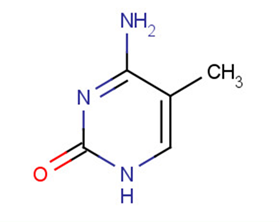
5-Methylcytosine
CAS No. 554-01-8
5-Methylcytosine( —— )
Catalog No. M20002 CAS No. 554-01-8
5-Methylcytosine is a methylated nucleotide base found in eukaryotic DNA. In animals the DNA methylation of cytosine to form 5-methylcytosine is found primarily in the palindromic sequence CpG. In plants the methylated sequence is CpNpGp where N can be any base. 5-Methylcytosine is an epigenetic modification formed by the action of DNA methyltransferases.
Purity : >98% (HPLC)
 COA
Datasheet
HNMR
HPLC
MSDS
Handing Instructions
COA
Datasheet
HNMR
HPLC
MSDS
Handing Instructions
| Size | Price / USD | Stock | Quantity |
| 1 mL x 10 mM in DMSO | 28 | In Stock |


|
| 100MG | Get Quote | In Stock |
|
| 200MG | Get Quote | In Stock |
|
| 500MG | Get Quote | In Stock |
|
| 1G | 31 | In Stock |
|
Biological Information
-
Product Name5-Methylcytosine
-
NoteResearch use only, not for human use.
-
Brief Description5-Methylcytosine is a methylated nucleotide base found in eukaryotic DNA. In animals the DNA methylation of cytosine to form 5-methylcytosine is found primarily in the palindromic sequence CpG. In plants the methylated sequence is CpNpGp where N can be any base. 5-Methylcytosine is an epigenetic modification formed by the action of DNA methyltransferases.
-
Description5-Methylcytosine is a methylated nucleotide base found in eukaryotic DNA. In animals the DNA methylation of cytosine to form 5-methylcytosine is found primarily in the palindromic sequence CpG. In plants the methylated sequence is CpNpGp where N can be any base. 5-Methylcytosine is an epigenetic modification formed by the action of DNA methyltransferases. In bacteria 5-methylcytosine can be found at a variety of sites and is often used as a marker to protect DNA from being cut by native methylation-sensitive restriction enzymes.
-
In Vitro——
-
In Vivo——
-
Synonyms——
-
PathwayOthers
-
TargetOther Targets
-
RecptorOthers
-
Research Area——
-
Indication——
Chemical Information
-
CAS Number554-01-8
-
Formula Weight125.13
-
Molecular FormulaC5H7N3O
-
Purity>98% (HPLC)
-
SolubilityWater:63.9 mM
-
SMILESCc1c[nH]c(=O)nc1N
-
Chemical Name4-amino-5-methylpyrimidin-2(1H)-one
Shipping & Storage Information
-
Storage(-20℃)
-
ShippingWith Ice Pack
-
Stability≥ 2 years
Reference
1.Pfeifer GP et al. Mutations induced by ultraviolet light. Mutat Res. 2005 Apr 1;571(1-2):19-31.
molnova catalog



related products
-
EZM0414 TFA
EZM0414 TFA (SETD2-IN-1 TFA) is a SETD2 inhibitor with anticancer and antiproliferative effects for the study of leukemia and immune dysfunction.
-
tert-Butyl5-bromo-1H...
Tert-Butyl5-bromo-1H-indole-1-carboxylate (N-Boc-5-bromoindole) is an indole derivative with therapeutic potential for pain, inflammation, and other conditions.
-
Napirimus
Napirimus is a compound used as a molecular building block.
