


 Cart
Cart
 sales@molnova.com


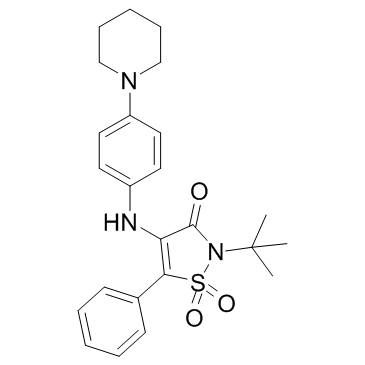
AZ876
CAS No. 898800-26-5
AZ876( —— )
Catalog No. M19966 CAS No. 898800-26-5
AZ876 is a potent highly selective LXR agonist with Ki/EC50 of 7/6 nM and 11/73 nM for hLXRα and hLXRβ respectively.
Purity : >98% (HPLC)
 COA
Datasheet
HNMR
HPLC
MSDS
Handing Instructions
COA
Datasheet
HNMR
HPLC
MSDS
Handing Instructions
| Size | Price / USD | Stock | Quantity |
| 5MG | 78 | In Stock |


|
| 10MG | 120 | In Stock |
|
| 25MG | 157 | In Stock |
|
| 50MG | 193 | In Stock |
|
| 100MG | 343 | In Stock |
|
| 200MG | Get Quote | In Stock |
|
| 500MG | Get Quote | In Stock |
|
| 1G | Get Quote | In Stock |
|
Biological Information
-
Product NameAZ876
-
NoteResearch use only, not for human use.
-
Brief DescriptionAZ876 is a potent highly selective LXR agonist with Ki/EC50 of 7/6 nM and 11/73 nM for hLXRα and hLXRβ respectively.
-
DescriptionAZ876 is a potent highly selective LXR agonist with Ki/EC50 of 7/6 nM and 11/73 nM for hLXRα and hLXRβ respectively.
-
In Vitro——
-
In Vivo——
-
Synonyms——
-
PathwayOthers
-
TargetOther Targets
-
RecptorLXR
-
Research Area——
-
Indication——
Chemical Information
-
CAS Number898800-26-5
-
Formula Weight439.57
-
Molecular FormulaC24H29N3O3S
-
Purity>98% (HPLC)
-
SolubilityDMSO: 2.5 mg/mL
-
SMILESCC(C)(C)N1C(=O)C(Nc2ccc(cc2)N2CCCCC2)=C(c2ccccc2)S1(=O)=O
-
Chemical Name2-(11-Dimethylethyl)-5-phenyl-4-[[4-(1-piperidinyl)phenyl]amino]-3(2H)-isothiazolone 11-dioxide
Shipping & Storage Information
-
Storage(-20℃)
-
ShippingWith Ice Pack
-
Stability≥ 2 years
Reference
1.van der Hoorn J et al. Low dose of the liver X receptor agonist AZ876 reduces atherosclerosis in APOE*3Leiden mice without affecting liver or plasma triglyceride levels. Br J Pharmacol. 2011 Apr;162(7):1553-63.
molnova catalog



related products
-
Dithiopropanol
An anti-gas warfare agent that is effective against Lewisite (dichloro(2-chlorovinyl)arsine) and formerly known as British Anti-Lewisite or BAL.
-
Adrenomedullin (AM) ...
Adrenomedullin (AM) (1-52), human (TFA) is an NH2 terminal truncated adrenomedullin analogue,affects cell proliferation and angiogenesis in cancer.
-
7-Oxocholesteryl ace...
From Cliona copiosa.
