


 Cart
 sales@molnova.com


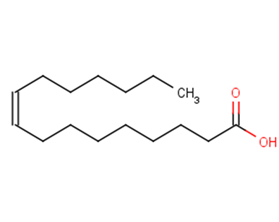
Palmitoleic acid
CAS No. 373-49-9
Palmitoleic acid( (Z)-Hexadec-9-enoic acid | (Z)-9-hexadecenoic acid )
Catalog No. M19746 CAS No. 373-49-9
Palmitoleic acid is found to be associated with isovaleric acidemia which is an inborn error of metabolism.
Purity : >98% (HPLC)
 COA
Datasheet
HNMR
HPLC
MSDS
Handing Instructions
| Size | Price / USD | Stock | Quantity |
| 1 mL x 10 mM in DMSO | 46 | In Stock |


|
| 25MG | 30 | In Stock |
|
| 50MG | 42 | In Stock |
|
| 100MG | 67 | In Stock |
|
| 200MG | Get Quote | In Stock |
|
| 500MG | 164 | In Stock |
|
| 1G | Get Quote | In Stock |
|
Biological Information
-
Product NamePalmitoleic acid
-
NoteResearch use only, not for human use.
-
Brief DescriptionPalmitoleic acid is found to be associated with isovaleric acidemia which is an inborn error of metabolism.
-
DescriptionPalmitoleic acid is found to be associated with isovaleric acidemia which is an inborn error of metabolism.
-
In Vitro——
-
In Vivo——
-
Synonyms(Z)-Hexadec-9-enoic acid | (Z)-9-hexadecenoic acid
-
PathwayProteasome/Ubiquitin
-
TargetEndogenous Metabolite
-
RecptorHuman Endogenous Metabolite
-
Research Area——
-
Indication——
Chemical Information
-
CAS Number373-49-9
-
Formula Weight254.41
-
Molecular FormulaC16H30O2
-
Purity>98% (HPLC)
-
SolubilityDMSO:10 mM;Water:1mg/mL
-
SMILESCCCCCC\C=C/CCCCCCCC(O)=O
-
Chemical Name——
Shipping & Storage Information
-
Storage(-20℃)
-
ShippingWith Ice Pack
-
Stability≥ 2 years
Reference
1.Ogunleye A et al. Fatty acid composition of breast milk from Nigerian and Japanese women. J Nutr Sci Vitaminol (Tokyo). 1991 Aug;37(4):435-42.
molnova catalog



related products
-
5-Methoxyindole-3-ac...
5-Methoxyindole-3-acetic acid is a metabolite of Melatonin and is isolated from pineal tissue.
-
4-Guanidinobutyric a...
4-Guanidinobutyric acid is an L-arginine metabolite that has been used in the intestinal transport tranport studies. It has been specifically use to human proton coupled amino acid transporters hPAT1.
-
Glutaric acid
Glutaric acid is a simple five-carbon linear dicarboxylic acid. Glutaric acid is naturally produced in the body during the metabolism of some amino acids including lysine and tryptophan. Glutaric acid may cause irritation to the skin and eyes. When present in sufficiently high levels glutaric acid can act as an acidogen and a metabotoxin.
