


 Cart
Cart
 sales@molnova.com


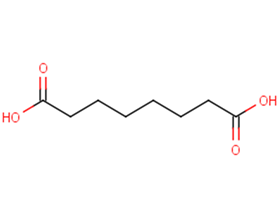
Suberic acid
CAS No. 505-48-6
Suberic acid( Octanedioic acid | 18-Octanedioic acid )
Catalog No. M19610 CAS No. 505-48-6
Suberic acid is present in the urine of patients with fatty acid oxidation disorders. A metabolic breakdown product derived from oleic acid.
Purity : >98% (HPLC)
 COA
Datasheet
HNMR
HPLC
MSDS
Handing Instructions
COA
Datasheet
HNMR
HPLC
MSDS
Handing Instructions
| Size | Price / USD | Stock | Quantity |
| 1 mL x 10 mM in DMSO | 28 | In Stock |


|
| 100MG | Get Quote | In Stock |
|
| 200MG | Get Quote | In Stock |
|
| 500MG | Get Quote | In Stock |
|
| 1G | 27 | In Stock |
|
Biological Information
-
Product NameSuberic acid
-
NoteResearch use only, not for human use.
-
Brief DescriptionSuberic acid is present in the urine of patients with fatty acid oxidation disorders. A metabolic breakdown product derived from oleic acid.
-
DescriptionSuberic acid is present in the urine of patients with fatty acid oxidation disorders. A metabolic breakdown product derived from oleic acid. Elevated levels of this unstaruated dicarboxylic acid are found in individuals with medium-chain acyl-CoA dehydrogenase deficiency (MCAD). Suberic acid is also associated with carnitine-acylcarnitine translocase deficiency malonyl-Coa decarboxylase deficiency.
-
In Vitro——
-
In Vivo——
-
SynonymsOctanedioic acid | 18-Octanedioic acid
-
PathwayOthers
-
TargetOther Targets
-
RecptorOthers
-
Research Area——
-
Indication——
Chemical Information
-
CAS Number505-48-6
-
Formula Weight174.19
-
Molecular FormulaC8H14O4
-
Purity>98% (HPLC)
-
SolubilityDMSO: 10 mM;Water: 1.6 mg/mL
-
SMILESOC(=O)CCCCCCC(O)=O
-
Chemical Name——
Shipping & Storage Information
-
Storage(-20℃)
-
ShippingWith Ice Pack
-
Stability≥ 2 years
Reference
1.Gregersen N et al. General (medium-chain) acyl-CoA dehydrogenase deficiency (non-ketotic dicarboxylic aciduria): quantitative urinary excretion pattern of 23 biologically significant organic acids in three cases. Clin Chim Acta. 1983 Aug 15;132(2):181-91.
molnova catalog



related products
-
Monocrotaline N-Oxid...
Monocrotaline N-Oxide is a monocrotaline metabolite.
-
2-Ethylhexyl 2-ethyl...
2-Ethylhexyl 2-ethylhexanoate is an industrially used organic solvent that can be used in paints, inks, detergents, and other fields.
-
20-O-Glucoginsenosid...
20-O-Glucoginsenoside Rf is a natural product extracted from Panax ginseng C. A. Mey.
