


 Cart
Cart
 sales@molnova.com


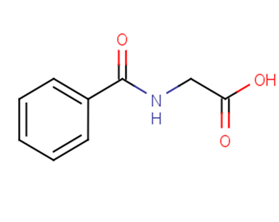
Hippuric acid
CAS No. 495-69-2
Hippuric acid( 2-Benzamidoacetic acid | Benzoylglycine )
Catalog No. M19608 CAS No. 495-69-2
Hippuric acid is an acyl glycine formed by the conjugation of benzoic acid with glycine. Hippuric acid is a normal component of urine and is typically increased with increased consumption of phenolic compounds (tea wine fruit juices).
Purity : >98% (HPLC)
 COA
Datasheet
HNMR
HPLC
MSDS
Handing Instructions
COA
Datasheet
HNMR
HPLC
MSDS
Handing Instructions
| Size | Price / USD | Stock | Quantity |
| 1 mL x 10 mM in DMSO | 29 | In Stock |


|
| 100MG | Get Quote | In Stock |
|
| 200MG | Get Quote | In Stock |
|
| 500MG | 39 | In Stock |
|
| 1G | Get Quote | In Stock |
|
Biological Information
-
Product NameHippuric acid
-
NoteResearch use only, not for human use.
-
Brief DescriptionHippuric acid is an acyl glycine formed by the conjugation of benzoic acid with glycine. Hippuric acid is a normal component of urine and is typically increased with increased consumption of phenolic compounds (tea wine fruit juices).
-
DescriptionHippuric acid is an acyl glycine formed by the conjugation of benzoic acid with glycine. Hippuric acid is a normal component of urine and is typically increased with increased consumption of phenolic compounds (tea wine fruit juices). These phenols are converted to benzoic acid which is then converted to hippuric acid and excreted in the urine.
-
In Vitro——
-
In Vivo——
-
Synonyms2-Benzamidoacetic acid | Benzoylglycine
-
PathwayOthers
-
TargetOther Targets
-
RecptorOthers
-
Research Area——
-
Indication——
Chemical Information
-
CAS Number495-69-2
-
Formula Weight179.17
-
Molecular FormulaC9H9NO3
-
Purity>98% (HPLC)
-
SolubilityDMSO:10 mM
-
SMILESOC(=O)CNC(=O)c1ccccc1
-
Chemical Name——
Shipping & Storage Information
-
Storage(-20℃)
-
ShippingWith Ice Pack
-
Stability≥ 2 years
Reference
1.Niwa T et al. Organic acids and the uremic syndrome: protein metabolite hypothesis in the progression of chronic renal failure. Semin Nephrol. 1996 May;16(3):167-82.
molnova catalog



related products
-
p-O-Farnesylcoumaric...
p-O-Farnesylcoumaric acid
-
Gastric Inhibitory P...
GIP (1-30) amide, porcine is a full glucose-dependent insulinotropic polypeptide (GIP) receptor agonist with high affinity equal to native GIP(1-42). GIP (1-30) amide, porcine is a weak inhibitor of gastric acid secretion and potent stimulator of insulin.
-
Kojibiose
Kojibiose is a disaccharide in honey. Kojibiose is a product of the caramelization of glucose.
