


 Cart
Cart
 sales@molnova.com


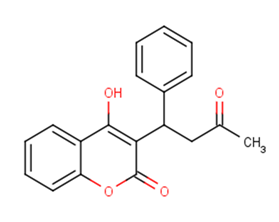
Warfarin
CAS No. 81-81-2
Warfarin( Athrombine-K | WARF42 )
Catalog No. M19508 CAS No. 81-81-2
Warfarin(WARF42) is an anticoagulant drug normally used to prevent blood clot formation as well as migration.
Purity : >98% (HPLC)
 COA
Datasheet
HNMR
HPLC
MSDS
Handing Instructions
COA
Datasheet
HNMR
HPLC
MSDS
Handing Instructions
| Size | Price / USD | Stock | Quantity |
| 100MG | Get Quote | In Stock |


|
| 200MG | 27 | In Stock |
|
| 500MG | Get Quote | In Stock |
|
| 1G | Get Quote | In Stock |
|
Biological Information
-
Product NameWarfarin
-
NoteResearch use only, not for human use.
-
Brief DescriptionWarfarin(WARF42) is an anticoagulant drug normally used to prevent blood clot formation as well as migration.
-
DescriptionWarfarin(WARF42) is an anticoagulant drug normally used to prevent blood clot formation as well as migration.
-
In Vitro——
-
In Vivo——
-
SynonymsAthrombine-K | WARF42
-
PathwayOthers
-
TargetOther Targets
-
RecptorVKOR complex subunit 1
-
Research AreaCardiovascular Disease
-
IndicationThromboembolism
Chemical Information
-
CAS Number81-81-2
-
Formula Weight308.33
-
Molecular FormulaC19H16O4
-
Purity>98% (HPLC)
-
SolubilityH2O: < 0.1 mg/mL (insoluble); DMSO: ≥ 50 mg/mL (162.16 mM)
-
SMILESCC(=O)CC(c1ccccc1)c1c(O)c2ccccc2oc1=O
-
Chemical Name4-hydroxy-3-(3-oxo-1-phenylbutyl)-2H-chromen-2-one
Shipping & Storage Information
-
Storage(-20℃)
-
ShippingWith Ice Pack
-
Stability≥ 2 years
Reference



-
RGD Trifluoroacetate
RGD Trifluoroacetate is a tripeptide that effectively triggers cell adhesion, addresses certain cell lines and elicits specific cell responses; RGD Trifluoroacetate binds to integrins.RGD Trifluoroacetate is the most effective and most often employed peptide sequence for stimulated cell adhesion on synthetic surfaces. There are 24 integrins binding to ECM molecules in a RGD dependent manner: α3β1, α5β1, α8β1, αIIbβ3, αvβ1, αvβ3, αvβ5, αvβ6, αvβ8, and to some extent α2β1 and α4β1.
-
Lucidin ω-ethyl ethe...
Lucidin ω-ethyl ether (compound 17) is an anthraquinone metabolite isolated from the root part of Prismatomeris filamentosa with some antibacterial activity against Gram-positive and Gram-negative bacteria.
-
Senkyunolide I
Senkyunolide I has neuroprotective effect, associated with its anti-oxidation and anti-apoptosis properties.
