


 Cart
Cart
 sales@molnova.com


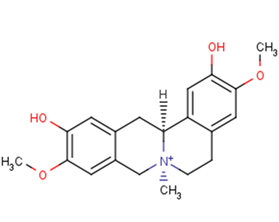
Phellodendrine
CAS No. 6873-13-8
Phellodendrine( —— )
Catalog No. M18997 CAS No. 6873-13-8
Phellodendrine has anti-nephritic activity, may be due to its ability to inhibit the proliferation or the migration of macrophages and cytotoxic T lymphocytes in the glomeruli.
Purity : >98% (HPLC)
 COA
Datasheet
HNMR
HPLC
MSDS
Handing Instructions
COA
Datasheet
HNMR
HPLC
MSDS
Handing Instructions
| Size | Price / USD | Stock | Quantity |
| 1 mL x 10 mM in DMSO | 67 | In Stock |


|
| 2MG | 34 | In Stock |
|
| 5MG | 51 | In Stock |
|
| 10MG | 73 | In Stock |
|
| 25MG | 117 | In Stock |
|
| 50MG | 166 | In Stock |
|
| 100MG | 247 | In Stock |
|
| 200MG | 367 | In Stock |
|
| 500MG | Get Quote | In Stock |
|
| 1G | Get Quote | In Stock |
|
Biological Information
-
Product NamePhellodendrine
-
NoteResearch use only, not for human use.
-
Brief DescriptionPhellodendrine has anti-nephritic activity, may be due to its ability to inhibit the proliferation or the migration of macrophages and cytotoxic T lymphocytes in the glomeruli.
-
DescriptionPhellodendrine has anti-nephritic activity, may be due to its ability to inhibit the proliferation or the migration of macrophages and cytotoxic T lymphocytes in the glomeruli.
-
In Vitro——
-
In Vivo——
-
Synonyms——
-
PathwayOthers
-
TargetOther Targets
-
RecptorOthers
-
Research Area——
-
Indication——
Chemical Information
-
CAS Number6873-13-8
-
Formula Weight342.41
-
Molecular FormulaC20H24NO4+
-
Purity>98% (HPLC)
-
SolubilityIn Vitro:?DMSO : 5 mg/mL (14.60 mM)
-
SMILESC[N+]12CCC3=CC(=C(C=C3C1CC4=CC(=C(C=C4C2)OC)O)O)OC
-
Chemical Name——
Shipping & Storage Information
-
Storage(-20℃)
-
ShippingWith Ice Pack
-
Stability≥ 2 years
Reference
molnova catalog



related products
-
GLP-1 moiety from Du...
GLP-1 moiety from Dulaglutide is a 31-amino acid fragment of Dulaglutide which is a glucagon-like peptide 1 receptor (GLP-1) agonist.
-
STC-15
STC-15 (example 70) is an orally active METTL3 inhibitor used in the study of proliferative diseases such as cancer and autoimmune diseases.
-
Haloxyfop methyl est...
Methyl 2-(4-((3-chloro-5-(trifluoromethyl)-2-pyridinyl)oxy)phenoxy)propanoate is a selective herbicide, an inhibitor of fatty acid synthesis, and has a systemic effect.
