


 Cart
Cart
 sales@molnova.com


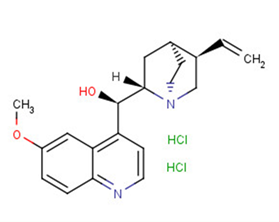
Quinine dihydrochloride
CAS No. 60-93-5
Quinine dihydrochloride( —— )
Catalog No. M18886 CAS No. 60-93-5
Quinine Dihydrochloride is a primary alkaloid of various species of Cinchona (Rubiaceae). It is also an antimalarial and muscle relaxant (skeletal).
Purity : >98% (HPLC)
 COA
Datasheet
HNMR
HPLC
MSDS
Handing Instructions
COA
Datasheet
HNMR
HPLC
MSDS
Handing Instructions
| Size | Price / USD | Stock | Quantity |
| 1 mL x 10 mM in DMSO | 43 | In Stock |


|
| 25MG | 29 | In Stock |
|
| 50MG | 34 | In Stock |
|
| 100MG | 47 | In Stock |
|
| 200MG | Get Quote | In Stock |
|
| 500MG | 99 | In Stock |
|
| 1G | 142 | In Stock |
|
Biological Information
-
Product NameQuinine dihydrochloride
-
NoteResearch use only, not for human use.
-
Brief DescriptionQuinine Dihydrochloride is a primary alkaloid of various species of Cinchona (Rubiaceae). It is also an antimalarial and muscle relaxant (skeletal).
-
DescriptionQuinine Dihydrochloride is a primary alkaloid of various species of Cinchona (Rubiaceae). It is also an antimalarial and muscle relaxant (skeletal).
-
In VitroQuinine dihydrochloride (150 μM, 30 min) inhibits the proliferation and cytostatic effects of DENV (Dengue virus) in human hepatocarcinoma HepG2 cell line.Quinine dihydrochloride (37.5-150 μM, 24 hours) significantly reduces viral DENV RNA and protein levels in a dose-dependent manner in human hepatocarcinoma HepG2 cell line . Cell Proliferation Assay Cell Line:Human hepatocarcinoma cell line(HepG2)Concentration:150 μM Incubation Time:30 min Result:Inhibited DENV virus replication with 19% yield compared to untreated. Reduced DENV-positive cells from 23.28% to 12.05% in a dose-dependent manner.
-
In VivoQuinine dihydrochloride (oral gavage, 12 or 15 mg/kg, every week, 16 weeks) has some tumor suppressing effect on skin cancer in Swiss albino mice.Quinine dihydrochloride (oral gavage, 10 mg/kg, everyday, 8 weeks) causes a decrease in the antioxidant defense system of rat testicular tissue such as SOD, CAT and GSH enzyme activity in male adult albino rats. Animal Model:Swiss albino mice 7-8-weeks (weighing 24 g)Dosage:12 mg/kg, 15 mg/kg Administration:Oral gavage; every week; 16 weeks Result:Resulted in a significant reduction in tumor size and weight at 12 mg/kg and little effect at higher dose of 15 mg/kg.
-
Synonyms——
-
PathwayOthers
-
TargetOther Targets
-
RecptorOthers
-
Research Area——
-
Indication——
Chemical Information
-
CAS Number60-93-5
-
Formula Weight397.34
-
Molecular FormulaC20H26Cl2N2O2
-
Purity>98% (HPLC)
-
Solubility——
-
SMILESCOC1=CC2=C(C=CN=C2C=C1)C(C3CC4CCN3CC4C=C)O.Cl.Cl
-
Chemical Name——
Shipping & Storage Information
-
Storage(-20℃)
-
ShippingWith Ice Pack
-
Stability≥ 2 years
Reference
1.Achan J,etal.Quinine, an old anti-malarial drug in a modern world: role in the treatment of malaria.Malar J. 2011; 10: 144.
molnova catalog



related products
-
Lingdolinurad
Lingdolinurad is a uric acid transporter protein inhibitor targeting hURAT1 for the study of hyperuricemia or gout.
-
PS 48
PS 48 has been shown to be a PKB Kinase (PDK1) activator (Kd: 10.3 μM). This compound selectively binds to the PIF-binding pocket of PKB Kinase (PDK1).
-
12beta-Acetoxy-3,7,1...
The fruit body of Ganoderma lucidum.
