


 Cart
 sales@molnova.com


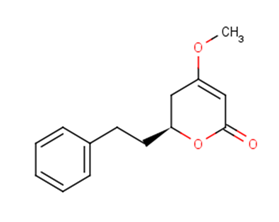
Dihydrokavain
CAS No. 587-63-3
Dihydrokavain( Dihydrokavain | Dihydrokawain | Kavain )
Catalog No. M18856 CAS No. 587-63-3
Dihydrokavain is one of the six major kavalactones found in the kava plant; appears to contribute significantly to the anxiolytic effects of kava, based on a study in chicks.
Purity : >98% (HPLC)
 COA
Datasheet
HNMR
HPLC
MSDS
Handing Instructions
| Size | Price / USD | Stock | Quantity |
| 1 mL x 10 mM in DMSO | 162 | In Stock |


|
| 5MG | 149 | In Stock |
|
| 10MG | 219 | In Stock |
|
| 25MG | 367 | In Stock |
|
| 50MG | 533 | In Stock |
|
| 100MG | Get Quote | In Stock |
|
| 200MG | Get Quote | In Stock |
|
| 500MG | Get Quote | In Stock |
|
| 1G | Get Quote | In Stock |
|
Biological Information
-
Product NameDihydrokavain
-
NoteResearch use only, not for human use.
-
Brief DescriptionDihydrokavain is one of the six major kavalactones found in the kava plant; appears to contribute significantly to the anxiolytic effects of kava, based on a study in chicks.
-
DescriptionDihydrokawain inhibits binding of batrachotoxinin-A 20-alpha-benzoate to receptor site 2 of voltage-gated sodium channels.
-
In Vitro——
-
In Vivo——
-
SynonymsDihydrokavain | Dihydrokawain | Kavain
-
PathwayOthers
-
TargetOther Targets
-
RecptorOthers
-
Research AreaOthers-Field
-
Indication——
Chemical Information
-
CAS Number587-63-3
-
Formula Weight232.27
-
Molecular FormulaC14H16O3
-
Purity>98% (HPLC)
-
SolubilityIn Vitro:?DMSO : 100 mg/mL (430.51 mM)
-
SMILESCOC1=CC(=O)O[C@@H](CCc2ccccc2)C1
-
Chemical Name(S)-4-methoxy-6-phenethyl-5,6-dihydro-2H-pyran-2-one
Shipping & Storage Information
-
Storage(-20℃)
-
ShippingWith Ice Pack
-
Stability≥ 2 years
Reference



-
Stichodactyla helian...
ShK toxin blocks voltage-dependent potassium channel (Kv1.3 channel). ShK toxin can be isolated from the whole body extract of the Caribbean sea anemone (Stichodactylu helianthus). ShK toxin competes with dendrotoxin I and α-dendrotoxin for binding to synaptosomal membranes of rat brain, facilitates acetylcholine release. ShK toxin suppresses K+ currents in cultured rat dorsal root ganglion neurons. ShK toxin also inhibits T lymphocyte proliferation.
-
Somatostatin-28 a
Somatostatin-28 (sheep, human rat mouse) is a biologically active polypeptide, synthesised in the proximal intestinal epithelial cells. Somatostatin-28 (sheep, human rat mouse) suppresses glucose-stimulated insulin secretion without affecting circulating basal insulin concentration. Somatostatin-28 (sheep, human rat mouse) also targets to somatostatin receptor subtype 5 (SSTR5) to regulate GLP-1 secretion.
-
FMRF - related pepti...
FMRF - related peptide, SDPFLRF - NH2
