


 Cart
Cart
 sales@molnova.com


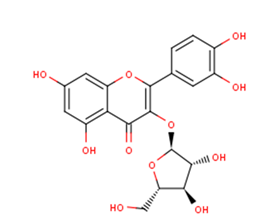
Avicularin
CAS No. 572-30-5
Avicularin( —— )
Catalog No. M18833 CAS No. 572-30-5
Avicularin exhibits anti-inflammatory activity through the suppression of ERK signaling pathway in LPS-stimulated RAW 264.7 macrophage cells.
Purity : >98% (HPLC)
 COA
Datasheet
HNMR
HPLC
MSDS
Handing Instructions
COA
Datasheet
HNMR
HPLC
MSDS
Handing Instructions
| Size | Price / USD | Stock | Quantity |
| 1 mL x 10 mM in DMSO | 107 | In Stock |


|
| 5MG | 93 | In Stock |
|
| 10MG | 155 | In Stock |
|
| 25MG | 282 | In Stock |
|
| 50MG | 408 | In Stock |
|
| 100MG | 603 | In Stock |
|
| 200MG | 860 | In Stock |
|
| 500MG | Get Quote | In Stock |
|
| 1G | Get Quote | In Stock |
|
Biological Information
-
Product NameAvicularin
-
NoteResearch use only, not for human use.
-
Brief DescriptionAvicularin exhibits anti-inflammatory activity through the suppression of ERK signaling pathway in LPS-stimulated RAW 264.7 macrophage cells.
-
DescriptionAvicularin exhibits anti-inflammatory activity through the suppression of ERK signaling pathway in LPS-stimulated RAW 264.7 macrophage cells. Avicularin inhibits the accumulation of the intracellular lipids by decreasing C/EBPα-activated GLUT4-mediated glucose uptake in adipocytes and potently inhibiting fatty acid synthase.
-
In VitroCell Proliferation Assay Cell Line:Huh7 cells Concentration:25, 50, 100 μg/mL Incubation Time:12, 24, 36 and 48 h Result:Inhibited cell proliferation in a dose-dependent manner.Western Blot Analysis Cell Line:RAW 264.7 cells Concentration:10, 30, 100, 300 μM Incubation Time:1 h Result:Inhibited LPS-induced protein expression of iNOS and COX-2, release of pro-inflammatory cytokine IL-1β, degradation of cytosolic IκB, and phosphorylation of ERK.RT-PCR Cell Line:3T3-L1 cells Concentration:50 μM Incubation Time:6 days Result:Decreased PPARγ, C/EBPα, and aP2 mRNA levels approximately 28.7, 69.5, and 18.3%, respectively.
-
In VivoAnimal Model:ACLT (anterior cruciate ligament transection)-induced rats Dosage:0.5, 1, 2 mg/kg Administration:Injected into the articular cavity of the right knee, twice a week for 4 weeks.Result:Alleviated the tibial subchondral osteolysis, reduces bone loss, and increases the bone mass of tibial subchondral bone.Attenuated ECM degradation, the loss of Aggrecan and Collagen II in ACLT-induced rats. Decreased the MMP3 and MMP13 protein level. Animal Model:Rats with amyloid Beta-induced Alzheimer's disease Dosage:25, 50, and 100 mg/kg Administration:Oral administration, for 21 days Result:Enhanced cognition activity, and reversed the effects of amyloid beta-induced inflammatory response and excessive oxidative stress.
-
Synonyms——
-
PathwayOthers
-
TargetOther Targets
-
RecptorERK
-
Research AreaOthers-Field
-
Indication——
Chemical Information
-
CAS Number572-30-5
-
Formula Weight434.35
-
Molecular FormulaC20H18O11
-
Purity>98% (HPLC)
-
SolubilityIn Vitro:?DMSO : 100 mg/mL (230.23 mM)
-
SMILESC1=CC(=C(C=C1C2=C(C(=O)C3=C(C=C(C=C3O2)O)O)OC4C(C(C(O4)CO)O)O)O)O
-
Chemical Name——
Shipping & Storage Information
-
Storage(-20℃)
-
ShippingWith Ice Pack
-
Stability≥ 2 years
Reference
molnova catalog



related products
-
Gastrodin
Gastrodin, an anti-inflammatory polyphenol extracted from Chinese natural herbal Gastrodia elata Blume., benefits neurodegenerative diseases.
-
yuanhuadine
Yuanhuadin, extracted from Genkwa Flos Daphne genkwa, has antitumor activity through inhibiting Akt/mTOR and EGFR pathways, induce cell-cycle arrest and abortion.
-
Dendrobine
Dendrobine has a slight but demonstrable analgesic and antipyretic action.Dendrobine produces moderate hyperglycemia, diminishes cardiac activity in large doses, lowers the blood pressure.
