


 Cart
Cart
 sales@molnova.com


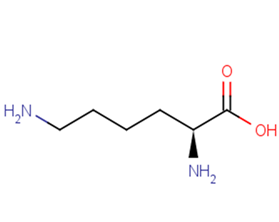
lysine
CAS No. 56-87-1
lysine( —— )
Catalog No. M18826 CAS No. 56-87-1
Lysine is one of nine essential amino acids in humans required for growth and tissue repair, Lysine is supplied by many foods, especially red meats, fish, and dairy products.
Purity : >98% (HPLC)
 COA
Datasheet
HNMR
HPLC
MSDS
Handing Instructions
COA
Datasheet
HNMR
HPLC
MSDS
Handing Instructions
| Size | Price / USD | Stock | Quantity |
| 100MG | Get Quote | In Stock |


|
| 200MG | Get Quote | In Stock |
|
| 500MG | 39 | In Stock |
|
| 1G | Get Quote | In Stock |
|
Biological Information
-
Product Namelysine
-
NoteResearch use only, not for human use.
-
Brief DescriptionLysine is one of nine essential amino acids in humans required for growth and tissue repair, Lysine is supplied by many foods, especially red meats, fish, and dairy products.
-
DescriptionLysine is one of nine essential amino acids in humans required for growth and tissue repair, Lysine is supplied by many foods, especially red meats, fish, and dairy products. Lysine seems to be active against herpes simplex viruses and present in many forms of diet supplements. The mechanism underlying this effect is based on the viral need for amino acid arginine; lysine competes with arginine for absorption and entry into cells. Lysine inhibits HSV growth by knocking out arginine.
-
In Vitro——
-
In Vivo——
-
Synonyms——
-
PathwayProteasome/Ubiquitin
-
TargetTyrosinase
-
Recptorherpes simplex virus
-
Research Area——
-
Indication——
Chemical Information
-
CAS Number56-87-1
-
Formula Weight146.19
-
Molecular FormulaC6H14N2O2
-
Purity>98% (HPLC)
-
SolubilityIn Vitro:?H2O : 100 mg/mL (684.04 mM)
-
SMILESC(CCN)CC(C(=O)O)N
-
Chemical Name——
Shipping & Storage Information
-
Storage(-20℃)
-
ShippingWith Ice Pack
-
Stability≥ 2 years
Reference
molnova catalog



related products
-
Licraside
Licraside is a tyrosinase inhibitor with an IC50 of 0.072 mM for monophenolase and can be used in studies about antibrowning and depigmenting agents.
-
Oxyresveratrol 2-O-β...
Oxyresveratrol 2-O-β-D-glucopyranoside is a phenolic compound isolated from Morus nigra root and is an effective tyrosinase inhibitor with an IC50 of 29.75 μM.
-
GTP-14564
GTP-14564 is a novel tyrosine kinase inhibitor that also inhibits wt-FLT3 and ITD-FLT3.
