


 Cart
Cart
 sales@molnova.com


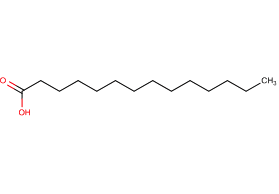
Myristic acid
CAS No. 544-63-8
Myristic acid( —— )
Catalog No. M18773 CAS No. 544-63-8
Myristic Acid, a 14 carbon saturated fatty acid, is a rare molecule in cells and is a substrate of some fatty acid desaturases.
Purity : >98% (HPLC)
 COA
Datasheet
HNMR
HPLC
MSDS
Handing Instructions
COA
Datasheet
HNMR
HPLC
MSDS
Handing Instructions
| Size | Price / USD | Stock | Quantity |
| 1 mL x 10 mM in DMSO | 41 | In Stock |


|
| 100MG | Get Quote | In Stock |
|
| 200MG | Get Quote | In Stock |
|
| 500MG | 36 | In Stock |
|
| 1G | 44 | In Stock |
|
Biological Information
-
Product NameMyristic acid
-
NoteResearch use only, not for human use.
-
Brief DescriptionMyristic Acid, a 14 carbon saturated fatty acid, is a rare molecule in cells and is a substrate of some fatty acid desaturases.
-
DescriptionMyristic Acid, a 14 carbon saturated fatty acid, is a rare molecule in cells and is a substrate of some fatty acid desaturases. This compound has the ability to acylate proteins by covalently binding to the N-terminal glycine residues, in a process called N-terminal myristoylation. Myristoylation of substrate proteins by this fatty acid has the potential to activate and mediate many physiological pathways. Furthermore, saturated fatty acids have been reported to be essential for biological activities of lipopolysaccharides and have demonstrated the ability to induce expression of COX-2 and NFκB (nuclear factor κB) activation.
-
In VitroWestern Blot Analysis Cell Line:MAC-T Concentration:100, 150, 200 μM Incubation Time:24 h Result:Increased the level of protein ubiquitination.Cell Viability Assay Cell Line:J774A.1 macrophages Concentration:12.5, 25, 50, 100,200 μg/mL Incubation Time:24 h Result:Showed non-cytotoxic effects in LPS-stimulated J774A.1 macrophages at 25 μg/mL.
-
In VivoAnimal Model:TPA-induced ear edema in miceDosage:12.5, 25, 50, 100 mg/kg Administration:p.o.Result:Decreased ear edema inflammation in the acute and chronic TPA assays with IC50 values of 62 and 77 mg/kg, respectively in a dose-dependent manner.Attenuated the acetic acid-induced abdominal contortions with ED50 values of 32 mg/kg.
-
Synonyms——
-
PathwayOthers
-
TargetOther Targets
-
RecptorOthers
-
Research Area——
-
Indication——
Chemical Information
-
CAS Number544-63-8
-
Formula Weight228.38
-
Molecular FormulaC14H28O2
-
Purity>98% (HPLC)
-
SolubilityDMSO : ≥ 250 mg/mL; 1094.71 mM
-
SMILESO=C(O)CCCCCCCCCCCCC
-
Chemical Name——
Shipping & Storage Information
-
Storage(-20℃)
-
ShippingWith Ice Pack
-
Stability≥ 2 years
Reference
1.Lee JY,etal.Saturated fatty acids, but not unsaturated fatty acids, induce the expression of cyclooxygenase-2 mediated through Toll-like receptor 4. J Biol Chem. 2001 May 18;276(20):16683-9.
molnova catalog



related products
-
Quercetin-3-O-β-D-gl...
Quercetin-3-O-β-D-glucose-7-O-β-D-gentiobiosiden is a flavonoid from Quercetin.
-
35-DIHYDROXY-4-METHO...
35-Dihydroxy-4-methoxybenzoic acid is a natural compound.
-
Pyridoxal 5'-phospha...
Pyridoxal 5′-phosphate the active form of vitamin B6 is a cofactor for many different enzymes involved in transamination reactions including mitochondrial cysteine desulfurase cystathionine γ-synthase various aminotransferases and a d-serine dehydratase.
