


 Cart
Cart
 sales@molnova.com


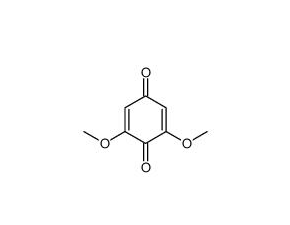
2,6-Dimethoxyquinone
CAS No. 530-55-2
2,6-Dimethoxyquinone( —— )
Catalog No. M18744 CAS No. 530-55-2
2, 6-dimethoxy-1, 4-benzoquinone is a member of the class of compounds known as P-benzoquinones.
Purity : >98% (HPLC)
 COA
Datasheet
HNMR
HPLC
MSDS
Handing Instructions
COA
Datasheet
HNMR
HPLC
MSDS
Handing Instructions
| Size | Price / USD | Stock | Quantity |
| 1 mL x 10 mM in DMSO | 28 | In Stock |


|
| 100MG | Get Quote | In Stock |
|
| 200MG | 27 | In Stock |
|
| 500MG | Get Quote | In Stock |
|
| 1G | Get Quote | In Stock |
|
Biological Information
-
Product Name2,6-Dimethoxyquinone
-
NoteResearch use only, not for human use.
-
Brief Description2, 6-dimethoxy-1, 4-benzoquinone is a member of the class of compounds known as P-benzoquinones.
-
Description2, 6-dimethoxy-1, 4-benzoquinone is a member of the class of compounds known as P-benzoquinones. 2, 6-dimethoxy-1, 4-benzoquinone is slightly soluble (in water) and an extremely weak basic (essentially neutral) compound (based on its pKa). It is a benzoquinone, a chemical compound found in Rauvolfia vomitoria, in Tibouchina pulchra, and in common wheat.
-
In Vitro——
-
In Vivo——
-
Synonyms——
-
PathwayMetabolic Enzyme/Protease
-
TargetP450
-
RecptorOthers
-
Research AreaOthers-Field
-
Indication——
Chemical Information
-
CAS Number530-55-2
-
Formula Weight168.15
-
Molecular FormulaC8H8O4
-
Purity>98% (HPLC)
-
SolubilityIn Vitro:?DMSO : 5.56 mg/mL (33.07 mM)
-
SMILESO=C1C(=CC(=O)C=C1OC)OC
-
Chemical Name——
Shipping & Storage Information
-
Storage(-20℃)
-
ShippingWith Ice Pack
-
Stability≥ 2 years
Reference
molnova catalog



related products
-
Tauroursodeoxycholic...
Tauroursodeoxycholic acid is the more hydrophilic form of ursodeoxycholic acid, which is the more abundant naturally produced bile acid in humans.
-
Seviteronel
Seviteronel (VT-464) is a novel CYP17 cleavage enzyme inhibitor and androgen receptor antagonist used in breast and prostate cancer research.
-
Verapamil
Verapamil is a calcium channel blocker and an orally active and effective inhibitor of P-gp.
