


 Cart
Cart
 sales@molnova.com


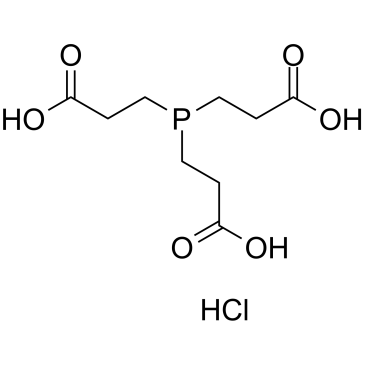
TCEP HCl
CAS No. 51805-45-9
TCEP HCl( —— )
Catalog No. M18706 CAS No. 51805-45-9
Tris(2-carboxyethyl)phosphine hydrochloride may be employed as a catalyst for the reduction of sulfoxides, sulfonyl chlorides, N-oxides, and azides.
Purity : >98% (HPLC)
 COA
Datasheet
HNMR
HPLC
MSDS
Handing Instructions
COA
Datasheet
HNMR
HPLC
MSDS
Handing Instructions
| Size | Price / USD | Stock | Quantity |
| 1 mL x 10 mM in DMSO | 43 | In Stock |


|
| 100MG | 40 | In Stock |
|
| 200MG | Get Quote | In Stock |
|
| 500MG | 50 | In Stock |
|
| 1G | 63 | In Stock |
|
Biological Information
-
Product NameTCEP HCl
-
NoteResearch use only, not for human use.
-
Brief DescriptionTris(2-carboxyethyl)phosphine hydrochloride may be employed as a catalyst for the reduction of sulfoxides, sulfonyl chlorides, N-oxides, and azides.
-
DescriptionTris(2-carboxyethyl)phosphine hydrochloride may be employed as a catalyst for the reduction of sulfoxides, sulfonyl chlorides, N-oxides, and azides. It may be used as a reducing agent for the reduction of various alkyl disulfides such as trans-4, 5-dihydroxy-1, 2-dithiane.
-
In VitroTCEP hydrochloride has been introduced which o?ers the prospect of serving as an alternative to the more commonly employed DTT in the NF-κB-DNA binding reactions in vitro, using recombinant p50 protein and a 32P-labelled κB oligonucleotide. DTT promotes NF-κB-DNA binding in concentrations from 0.25 to 2.6 mM in binding reactions. However, in the presence of 0.25 mM DTT, inhibition of NF-κB binding is seen only at Hg2+ concentrations greater than 100 μM and results are highly variable. In contrast, TCEP hydrochloride promotes NF-κB-DNA binding in a dose-related manner in concentrations from 0.25 to 6 mM. In the presence of even 6 mM TCEP hydrochloride, Hg2+ prevents NF-κB-DNA binding at concentrations as low as 20 μM in binding reactions.The human lactoferrin (hLF) peptide is dissolved in phosphate buffer to a concentration of 0.1 mm. Reduction of the disulfide bonds is obtained by adding a 30-fold molar excess of TCEP hydrochloride with subsequent incubation for 2 h at 37 ℃.
-
In Vivo——
-
Synonyms——
-
PathwayApoptosis
-
TargetCaspase
-
RecptorOthers
-
Research Area——
-
Indication——
Chemical Information
-
CAS Number51805-45-9
-
Formula Weight286.65
-
Molecular FormulaC9H16ClO6P
-
Purity>98% (HPLC)
-
SolubilityIn Vitro:?DMSO : 100 mg/mL (348.86 mM)
-
SMILESCl.OC(=O)CCP(CCC(O)=O)CCC(O)=O
-
Chemical Name——
Shipping & Storage Information
-
Storage(-20℃)
-
ShippingWith Ice Pack
-
Stability≥ 2 years
Reference
1. Burns J A, et al. Selective reduction of disulfides by tris(2-carboxyethyl)phosphine[J]. Journal of Organic Chemistry, 1991, 22(39):2648-2650.
molnova catalog



related products
-
Lucidenic acid B
Lucidenic acid B (Lucidenicacid B), a natural compound extracted from Ganoderma lucidum, induces activation of caspase-9 and caspase-3 and cleavage of PARP, which can induce apoptosis in human leukemia cells through mitochondrial mediation.
-
Anisperimus
Anisperimus (LF 15-0195) is an immunosuppressant that enhances activation-induced T-cell death by promoting caspase-8 and caspase-10 activation at the DISC level, and prevents CNS autoimmunity by promoting the development of Foxp3-expressing regulatory CD4 T cells.
-
Friedelin
Friedelin possesses antioxidant, gastroprotective, anti-diarrhoeal, liver protective, anti-inflammatory, analgesic and antipyretic activities.
