


 Cart
Cart
 sales@molnova.com


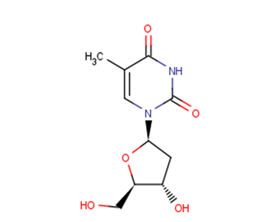
Thymidine
CAS No. 50-89-5
Thymidine( Thymidine | AI3-52267 | AI3 52267 | AI352267 )
Catalog No. M18679 CAS No. 50-89-5
Thymidine overload due to Thymidine phosphorylase deficiency, and mitochondrial toxicity caused by antiviral Thymidine analogues.
Purity : >98% (HPLC)
 COA
Datasheet
HNMR
HPLC
MSDS
Handing Instructions
COA
Datasheet
HNMR
HPLC
MSDS
Handing Instructions
| Size | Price / USD | Stock | Quantity |
| 1 mL x 10 mM in DMSO | 48 | In Stock |


|
| 100MG | Get Quote | In Stock |
|
| 200MG | Get Quote | In Stock |
|
| 500MG | 42 | In Stock |
|
| 1G | Get Quote | In Stock |
|
Biological Information
-
Product NameThymidine
-
NoteResearch use only, not for human use.
-
Brief DescriptionThymidine overload due to Thymidine phosphorylase deficiency, and mitochondrial toxicity caused by antiviral Thymidine analogues.
-
DescriptionThymidine is a nucleoside in which THYMINE is linked to DEOXYRIBOSE.
-
In Vitro——
-
In VivoAnimal Model:8-12 weeks BALB/c mice Dosage:500 mg/kg Administration:i.p.; twice a day Result:Completely abrogates Methotrexate- and Tomudex-induced deletion of Vβ8+ T cells after SEB injection.
-
SynonymsThymidine | AI3-52267 | AI3 52267 | AI352267
-
PathwayEndocrinology/Hormones
-
TargetAChR
-
RecptorOthers
-
Research Area——
-
Indication——
Chemical Information
-
CAS Number50-89-5
-
Formula Weight242.23
-
Molecular FormulaC10H14N2O5
-
Purity>98% (HPLC)
-
SolubilityDMSO : 50 mg/mL 206.42 mM;H2O : 33.33 mg/mL 137.60 mM
-
SMILESCC1=CN(C(=O)NC1=O)C2CC(C(O2)CO)O
-
Chemical Name5-Methyldeoxyurindine
Shipping & Storage Information
-
Storage(-20℃)
-
ShippingWith Ice Pack
-
Stability≥ 2 years
Reference
molnova catalog



related products
-
Oxybutynin
Oxybutynin is an anticholinergic medication used to relieve urinary and bladder difficulties.
-
Mepenzolate Bromide
Mepenzolate Bromide is a muscarinic antagonist used to treat gastrointestinal disorders, decreases the severity of elastase-induced airspace enlargement and respiratory dysfunction.
-
Sulconazole Nitrate
Sulconazole Nitrate is the nitrate salt form of sulconazole, a synthetic imidazole derivative with the antifungal property.
