


 Cart
Cart
 sales@molnova.com


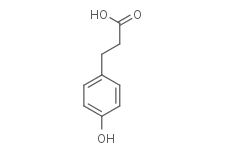
Phloretic acid
CAS No. 501-97-3
Phloretic acid( 3-(4-Hydroxyphenyl)propionic acid )
Catalog No. M18668 CAS No. 501-97-3
Phloretic acid is a phenolic compound. It can be used to produce polyesters based on phloretic acid and gallic acid.
Purity : >98% (HPLC)
 COA
Datasheet
HNMR
HPLC
MSDS
Handing Instructions
COA
Datasheet
HNMR
HPLC
MSDS
Handing Instructions
| Size | Price / USD | Stock | Quantity |
| 100MG | 38 | Get Quote |


|
| 200MG | Get Quote | Get Quote |
|
| 500MG | Get Quote | Get Quote |
|
| 1G | Get Quote | Get Quote |
|
Biological Information
-
Product NamePhloretic acid
-
NoteResearch use only, not for human use.
-
Brief DescriptionPhloretic acid is a phenolic compound. It can be used to produce polyesters based on phloretic acid and gallic acid.
-
DescriptionPhloretic acid is a phenolic compound. It can be used to produce polyesters based on phloretic acid and gallic acid.
-
In Vitro——
-
In VivoWild-type mice produce nanomoles of Desaminotyrosine per gram of feces and have picomolar quantities of Desaminotyrosine in the serum. Desaminotyrosine (200 mM) treatment before influenza infection, protects from influenza by type I interferon (IFN) signaling, with no effect on weight loss or survival in mice with or without vancomycin, neomycin, ampicillin, and metronidazole (VNAM). Desaminotyrosine enhances type I IFN in macrophages via type I IFN amplification in mice.
-
Synonyms3-(4-Hydroxyphenyl)propionic acid
-
PathwayMembrane Transporter/Ion Channel
-
TargetNADPH
-
RecptorOthers
-
Research Area——
-
Indication——
Chemical Information
-
CAS Number501-97-3
-
Formula Weight166.17
-
Molecular FormulaC9H10O3
-
Purity>98% (HPLC)
-
SolubilityDMSO : ≥ 300 mg/mL; 1805.27 mM
-
SMILESc1cc(ccc1CCC(=O)O)O
-
Chemical Name——
Shipping & Storage Information
-
Storage(-20℃)
-
ShippingWith Ice Pack
-
Stability≥ 2 years
Reference
1. Chesson A, et al. Applied and environmental microbiology, 1982, 44 (3): 597–603.
molnova catalog



related products
-
GKT137831
GKT137831 (Setanaxib, GKT-137831) is a potent, selective, dual NADPH oxidase Nox1/4 inhibitor with Ki of 110/140 nM.
-
NQO1 substrate
NQO1 substrate is a highly potent NQO1 substrate with potential antitumor activity for leukemia research.
-
Aucuparin
Aucuparin (2,6-dimethoxy-4-phenylphenol) is a plant antibiotic with anti-inflammatory activity. Aucuparin inhibited pulmonary fibrosis in mouse models induced by bleomycin (BLM).
