


 Cart
Cart
 sales@molnova.com


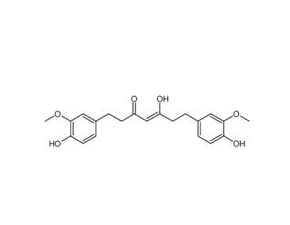
Tetrahydro Curcumin
CAS No. 36062-04-1
Tetrahydro Curcumin( HZIV 81-2 )
Catalog No. M18471 CAS No. 36062-04-1
Tetrahydrocurcumin (THC), is a product of bacterial or intestinal metabolism of curcumin (via the bacterial enzyme NADPH-dependent curcumin reductase).
Purity : >98% (HPLC)
 COA
Datasheet
HNMR
HPLC
MSDS
Handing Instructions
COA
Datasheet
HNMR
HPLC
MSDS
Handing Instructions
| Size | Price / USD | Stock | Quantity |
| 1 mL x 10 mM in DMSO | 43 | In Stock |


|
| 10MG | 57 | In Stock |
|
| 25MG | 102 | In Stock |
|
| 100MG | Get Quote | In Stock |
|
| 200MG | Get Quote | In Stock |
|
| 500MG | Get Quote | In Stock |
|
| 1G | Get Quote | In Stock |
|
Biological Information
-
Product NameTetrahydro Curcumin
-
NoteResearch use only, not for human use.
-
Brief DescriptionTetrahydrocurcumin (THC), is a product of bacterial or intestinal metabolism of curcumin (via the bacterial enzyme NADPH-dependent curcumin reductase).
-
DescriptionTetrahydrocurcumin (THC), is a product of bacterial or intestinal metabolism of curcumin (via the bacterial enzyme NADPH-dependent curcumin reductase). Curcumin is a yellow, polyphenolic pigment, derived from the rhizomes of a plant (Curcuma longa Linn). In E. coli curcumin is a substrate for the enzyme NADPH-dependent curcumin reductase which catalyzes the metal-independent reduction of curcumin to dihydro curcumin (DHC) as an intermediate product, followed by further reduction to tetrahydrocurcumin (THC) as an end product.
-
In VitroTetrahydrocurcumin (THC) has a number of attractive properties not shared with Curcumin that may make it superior.Tetrahydrocurcumin inhibited lipoxygenase as low as 1 μM. Tetrahydrocurcumin is tested for its ability to inhibit CYP2C9, CYP3A4, CYP1A2 and CYP2D6. Tetrahydrocurcumin yields dose-dependent inhibition of CYP2C9, and to a lesser extent, CYP3A4. Tetrahydrocurcumin exhibits maximum inhibition of CYP2C9 and CYP3A4 at 50 to 100 μM. Tetrahydrocurcumin does not show a consistent dose-response inhibition of CYP1A2 or CYP2D6 over the range of concentrations tested. In some cases, the percent inhibition exceeds 100%. The effect of Tetrahydrocurcumin on cancer cell viability is measured. Sup-T1 cells, T-cell lymphoblastic lymphoma cells, are treated with Tetrahydrocurcumin to determine its ability to induce growth inhibition using an MTS assay, and the corresponding IC50 values are in the mid-to-high micromolar range.
-
In VivoThe serum Tetrahydrocurcumin (THC) concentration versus time curve shows that more than one absorption and distribution phase is present. Initially, a rapid absorption phase with an average Tmax of 6.8 μg/mL at 1 h is observed, followed by a short elimination phase. This is followed by two redistributions with two smaller Tetrahydrocurcumin maxima at 6 and 24 h. Both redistribution phases has similar maxima of about 1 μg/mL. The total amount of Tetrahydrocurcumin excrets unchanged in urine was up to 8 μg at 24 h.
-
SynonymsHZIV 81-2
-
PathwayOthers
-
TargetOther Targets
-
RecptorOthers
-
Research AreaOthers-Field
-
Indication——
Chemical Information
-
CAS Number36062-04-1
-
Formula Weight372.41
-
Molecular FormulaC21H24O6
-
Purity>98% (HPLC)
-
SolubilityDMSO : ≥ 3.8 mg/mL; 10.20 mM
-
SMILESC(CC(=O)CC(=O)CCc1cc(c(cc1)O)OC)c1cc(c(cc1)O)OC
-
Chemical Name——
Shipping & Storage Information
-
Storage(-20℃)
-
ShippingWith Ice Pack
-
Stability≥ 2 years
Reference
1.Kang N, et al. Food Chem Toxicol. 2014 May;67:193-200.
molnova catalog



related products
-
Levulinic acid
Levulinic acid derived from the degradation of cellulose is a precursor for the synthesis of biofuels such as ethyl levulinate.
-
Melittoside
Melittoside is a natural product and may have antioxidant activity.
-
Macrophylloside D
Macrophylloside D is a natural product for research related to life sciences.
