


 Cart
 sales@molnova.com


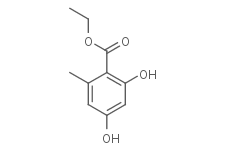
Orsellinic acid ethyl ester
CAS No. 2524-37-0
Orsellinic acid ethyl ester( —— )
Catalog No. M18310 CAS No. 2524-37-0
Orsellinic acid ethyl ester is a phenolic acid, extracted from lichens.
Purity : >98% (HPLC)
 COA
Datasheet
HNMR
HPLC
MSDS
Handing Instructions
| Size | Price / USD | Stock | Quantity |
| 1 mL x 10 mM in DMSO | 28 | In Stock |


|
| 50MG | 27 | In Stock |
|
| 100MG | Get Quote | In Stock |
|
| 200MG | Get Quote | In Stock |
|
| 500MG | Get Quote | In Stock |
|
| 1G | Get Quote | In Stock |
|
Biological Information
-
Product NameOrsellinic acid ethyl ester
-
NoteResearch use only, not for human use.
-
Brief DescriptionOrsellinic acid ethyl ester is a phenolic acid, extracted from lichens.
-
DescriptionOrsellinic acid ethyl ester is a phenolic acid, extracted from lichens.
-
In VitroEthyl Orsellinate (0-50 μg/ml; 48 hours) inhibits Hep-2 cells, MCF-7 breast cancer cells, and 786-0 kidney carcinoma cells, as well as B16-F10 murine melanoma and non-cancerous Vero cells (IC50s=31.2, 70.3, 47.5, 64.8, and 28.1 μg/ml, respectively).
-
In Vivo——
-
Synonyms——
-
PathwayOthers
-
TargetOther Targets
-
RecptorOthers
-
Research AreaOthers-Field
-
Indication——
Chemical Information
-
CAS Number2524-37-0
-
Formula Weight196.2
-
Molecular FormulaC10H12O4
-
Purity>98% (HPLC)
-
SolubilityIn Vitro:?DMSO : 100 mg/mL (509.68 mM)
-
SMILESCCOC(=O)c1c(cc(cc1C)O)O
-
Chemical Name——
Shipping & Storage Information
-
Storage(-20℃)
-
ShippingWith Ice Pack
-
Stability≥ 2 years
Reference
1. Qi H, Chen J, Shi Y. Zhongguo Zhong Yao Za Zhi. 2011 Aug;36(16):2233-5.
molnova catalog



related products
-
Ademetionine
S-ADENOSYL-L-METHIONINE (SAM) is a ubiquitous methyl donor involved in a wide variety of biological reactions, including those mediated by DNA and protein methyltransferases.
-
Acetyl-(Lys0,Nle3)-γ...
Acetyl-(Lys0,Nle3)-γ2-MSH amide
-
3-Hydroxybenzoic aci...
Produced in the gut microflora as one of the three main metabolites formed from the catechin diet. Its use in the production of glycol benzoates for the application of plasticizer in adhesive formulations is increasing.
