


 Cart
Cart
 sales@molnova.com


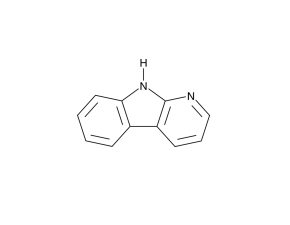
Norharmane
CAS No. 244-63-3
Norharmane( —— )
Catalog No. M18299 CAS No. 244-63-3
Norharmane is a natural β-carboline first isolated from plants of the Zygophyllaceae family.
Purity : >98% (HPLC)
 COA
Datasheet
HNMR
HPLC
MSDS
Handing Instructions
COA
Datasheet
HNMR
HPLC
MSDS
Handing Instructions
| Size | Price / USD | Stock | Quantity |
| 1 mL x 10 mM in DMSO | 28 | In Stock |


|
| 100MG | Get Quote | In Stock |
|
| 200MG | 28 | In Stock |
|
| 500MG | 41 | In Stock |
|
| 1G | 57 | In Stock |
|
Biological Information
-
Product NameNorharmane
-
NoteResearch use only, not for human use.
-
Brief DescriptionNorharmane is a natural β-carboline first isolated from plants of the Zygophyllaceae family.
-
DescriptionNorharmane is a natural β-carboline first isolated from plants of the Zygophyllaceae family.
-
In Vitro——
-
In VivoAnimal Model:Male NMRI mice (22-25?g)Dosage:0, 2.5, 5 and 10?mg/kg Administration:IP, onceResult:Elicited an anxiety- and antidepressant-like behavior, and decreased locomotor activity.
-
Synonyms——
-
PathwayMAPK/ERK Signaling
-
TargetJNK
-
RecptorDNA
-
Research Area——
-
Indication——
Chemical Information
-
CAS Number244-63-3
-
Formula Weight168.2
-
Molecular FormulaC11H8N2
-
Purity>98% (HPLC)
-
SolubilityIn Vitro:?DMSO : 11 mg/mL (65.40 mM)
-
SMILESc12ccccc1c1ccncc1[nH]2
-
Chemical Name——
Shipping & Storage Information
-
Storage(-20℃)
-
ShippingWith Ice Pack
-
Stability≥ 2 years
Reference
1. Jamali., et al. Inhibitory effect of Rosa rugosa tea extract on the formation of heterocyclic amines in meat patties at different temperatures. Molecules 21(2), 173 (2016).
molnova catalog



related products
-
Tanzisertib
Tanzisertib (CC-930) is a potent inhibitor of JNK1/2/3 with IC50s of 61/7/6 nM, respectively, with potential antifibrotic activity.Tanzisertib (CC-930) inhibits the formation of phospho-cJun in human PBMC stimulated by phorbol-12-myristate-13-acetate and phytohemeagglutinin (IC50=1 μM)[1] and it blocks the JNK pathway that is activated by pro-fibrotic cytokines in systemic sclerosis.
-
JNK-IN-13
JNK-IN-13 is a selective and potent JNK inhibitor that inhibits JNK3 and JNK2 and can be used in the study of diabetes, inflammation, and neurological disorders.
-
PIK-293
PIK-293 is a?PI3K?inhibitor, for?PI3Kδ( IC50=0.24 μM), and less potent for PI3Kα/β/ γ.
