


 Cart
Cart
 sales@molnova.com


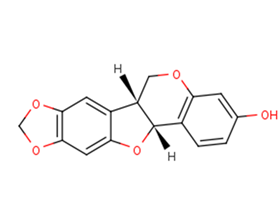
Maackiain
CAS No. 19908-48-6
Maackiain( —— )
Catalog No. M18198 CAS No. 19908-48-6
MAK1 is the second functional gene cloned from Maackiain detoxification.
Purity : >98% (HPLC)
 COA
Datasheet
HNMR
HPLC
MSDS
Handing Instructions
COA
Datasheet
HNMR
HPLC
MSDS
Handing Instructions
| Size | Price / USD | Stock | Quantity |
| 1 mL x 10 mM in DMSO | 67 | In Stock |


|
| 5MG | 60 | In Stock |
|
| 10MG | 86 | In Stock |
|
| 25MG | 140 | In Stock |
|
| 50MG | 200 | In Stock |
|
| 100MG | 296 | In Stock |
|
| 200MG | Get Quote | In Stock |
|
| 500MG | Get Quote | In Stock |
|
| 1G | Get Quote | In Stock |
|
Biological Information
-
Product NameMaackiain
-
NoteResearch use only, not for human use.
-
Brief DescriptionMAK1 is the second functional gene cloned from Maackiain detoxification.
-
DescriptionMaackiain induces apoptosis and growth suppression MAK1 is the second functional gene cloned from Maackiain detoxification.
-
In Vitro——
-
In Vivo——
-
Synonyms——
-
PathwayOthers
-
TargetOther Targets
-
RecptorOthers
-
Research AreaOthers-Field
-
Indication——
Chemical Information
-
CAS Number19908-48-6
-
Formula Weight284.26
-
Molecular FormulaC16H12O5
-
Purity>98% (HPLC)
-
SolubilityIn Vitro:?DMSO : 250 mg/mL (879.48 mM)
-
SMILESC1C2C(C3=C(O1)C=C(C=C3)O)OC4=CC5=C(C=C24)OCO5
-
Chemical Name——
Shipping & Storage Information
-
Storage(-20℃)
-
ShippingWith Ice Pack
-
Stability≥ 2 years
Reference
molnova catalog



related products
-
Fissistigine A
Fissistigine A is an alkaloid derived from the basic fractions of Formosan Fissistigma glaucescens, F. oldhamii, and Goniothalamus amuyon.
-
Dacisteine
Dacisteine is an inhibitor of New Delhi metallo-beta-lactamase-1 (NDM-1, IC50 = 1000 μM).
-
NS-2028
NS-2028 is a highly selective soluble Guanylyl Cyclase (sGC) inhibitor (IC50: 30 nM and 200 nM for basal and NO-stimulated enzyme activity).
