


 Cart
Cart
 sales@molnova.com


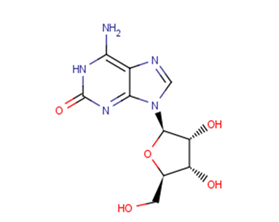
Crotonoside
CAS No. 1818-71-9
Crotonoside( —— )
Catalog No. M18143 CAS No. 1818-71-9
Crotonoside has much more active than adenosine in reducing the blood pressure in rabbits and cats, in decreasing the tone of isolated intestinal strips of the rabbit, guinea pig and hamster and in stimulating the isolated uterus of guinea pigs and hamsters.
Purity : >98% (HPLC)
 COA
Datasheet
HNMR
HPLC
MSDS
Handing Instructions
COA
Datasheet
HNMR
HPLC
MSDS
Handing Instructions
| Size | Price / USD | Stock | Quantity |
| 1 mL x 10 mM in DMSO | 29 | In Stock |


|
| 5MG | 29 | In Stock |
|
| 10MG | 45 | In Stock |
|
| 25MG | 83 | In Stock |
|
| 50MG | 124 | In Stock |
|
| 100MG | 196 | In Stock |
|
| 200MG | 275 | In Stock |
|
| 500MG | Get Quote | In Stock |
|
| 1G | Get Quote | In Stock |
|
Biological Information
-
Product NameCrotonoside
-
NoteResearch use only, not for human use.
-
Brief DescriptionCrotonoside has much more active than adenosine in reducing the blood pressure in rabbits and cats, in decreasing the tone of isolated intestinal strips of the rabbit, guinea pig and hamster and in stimulating the isolated uterus of guinea pigs and hamsters.
-
DescriptionCrotonoside has much more active than adenosine in reducing the blood pressure in rabbits and cats, in decreasing the tone of isolated intestinal strips of the rabbit, guinea pig and hamster and in stimulating the isolated uterus of guinea pigs and hamsters. Crotonoside inhibits the growth of S-18 and Ehrlich solid tumor in mice at the optimal doses of 96 mg/kg/day x 12 and 48 mg/kg/day x 12, with 1-T/C values of 65% and 6%, respectively.
-
In VitroCrotonoside (0-200 μM;) selectively inhibits the viability of AML cell line MV4-11, MOLM-13 (with FLT3-ITD mutant) and KG-1 (without FLT3-ITD mutant) in a dose-dependent manner with an IC50 of 11.6 μM, 12.7 μM and 17.2 μM, respectively.Crotonoside (0-100μM; 7 hours) inhibits the phosphorylation of FLT3 Erk1/2, Akt/mTOR and STAT5 is strongly inhibited by crotonoside at higher concentration of 12.5 μM in a concentration-dependent manner.Crotonoside (0-100 μM; 12 hours) exhibits a dose-dependent increase in the percentage of G0/G1 phase and a dose-dependent decrease in the percentage of G2/M and S phases cells. Crotonoside (0-100 μM; 24 hours) leads to concentration-dependent changes in the number of apoptotic MV4-11 cells, results in a dose-dependent decrease in the level of pro-caspase-3 and a dose-dependent increase in the level of the cleaved caspase-3 fragments. Cell Viability Assay Cell Line:AML cell line MV4-11, MOLM-13 and KG-1 cells Concentration:0-200 μM Incubation Time:72 hours Result:Inhibited AML cells growth than other cell lines tested.Western Blot Analysis Cell Line:MV4-11 cells Concentration:0 μM, 12.5 μM, 25 μM, 50 μM Incubation Time:7 hours Result:Inhibited AML cells growth than other cell lines tested.Cell Cycle Analysis Cell Line:MV4-11 cells Concentration:0 μM, 12.5 μM, 25 μM, 50 μM Incubation Time:12 hours Result:Induced cell cycle arrest in G0/G1.Apoptosis Analysis Cell Line:MV4-11 cells Concentration:0 μM, 12.5 μM, 25 μM, 50 μM Incubation Time:24 hours Result:Induced MV4-11 cell apoptosis.
-
In VivoCrotonoside(intraperitoneal and intravenous injection; 70 mg/kg, 35 mg/kg; once daily) induces a significant antitumor activity and inhibited xenograft tumor progress as compared to treatment with vehicle. Animal Model: NOD-SCID mice with MV4-11 cells Dosage:70 mg/kg, 35 mg/kg Administration:Intraperitoneal and intravenous injection; 70 mg/kg, 35 mg/kg; once daily Result:Produced significant AML tumor inhibition rates of 93.5% at 70 mg/kg.
-
Synonyms——
-
PathwayOthers
-
TargetOther Targets
-
RecptorOthers
-
Research AreaCardiovascular Disease
-
Indication——
Chemical Information
-
CAS Number1818-71-9
-
Formula Weight283.24
-
Molecular FormulaC10H13N5O5
-
Purity>98% (HPLC)
-
SolubilityIn Vitro:?DMSO : 25 mg/mL (88.26 mM)
-
SMILESC1=NC2=C(NC(=O)N=C2N1C3C(C(C(O3)CO)O)O)N
-
Chemical Name——
Shipping & Storage Information
-
Storage(-20℃)
-
ShippingWith Ice Pack
-
Stability≥ 2 years
Reference



-
Neoprocurcumenol
Neoprocurcumenol is a larvicidal compound that exerts significant toxicity on mosquito larvae with LC50 and LC 90 values of 13.69 and 23.92 ppm, respectively.
-
Atrial Natriuretic F...
Anaritide is a synthetic form of atrial natriuretic peptide (ANP) composed of 25 amino acids. Anaritide increases glomerular filtration rate by dilating into and contracting out the bulbar arterioles. Anaritide can be used to study the effects on patients with acute tubular necrosis, particularly in improving dialysis free survival.
-
Ibuprofen sodium sal...
Ibuprofen ((±)-Ibuprofen) sodium is an orally active, selective COX-1 inhibitor with an IC50 value of 13 μM. Ibuprofen sodium inhibits cell proliferation, angiogenesis, and induces cell apoptosis. Ibuprofen sodium is a nonsteroidal anti-inflammatory agent and a nitric oxide (NO) donor. Ibuprofen sodium can be used in the research of pain, swelling, inflammation, infection, immunology, cancers[8].
