


 Cart
Cart
 sales@molnova.com


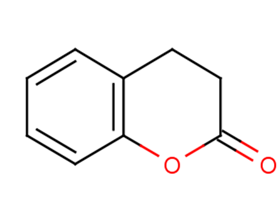
Hydrocoumarin
CAS No. 119-84-6
Hydrocoumarin( Hydrocoumarin | Chroman-2-one )
Catalog No. M17874 CAS No. 119-84-6
Spice, used in food, also used as a substitute for coumarin; used in cosmetics.
Purity : >98% (HPLC)
 COA
Datasheet
HNMR
HPLC
MSDS
Handing Instructions
COA
Datasheet
HNMR
HPLC
MSDS
Handing Instructions
| Size | Price / USD | Stock | Quantity |
| 1 mL x 10 mM in DMSO | 28 | In Stock |


|
| 25MG | 49 | In Stock |
|
| 100MG | Get Quote | In Stock |
|
| 200MG | Get Quote | In Stock |
|
| 500MG | Get Quote | In Stock |
|
| 1G | Get Quote | In Stock |
|
Biological Information
-
Product NameHydrocoumarin
-
NoteResearch use only, not for human use.
-
Brief DescriptionSpice, used in food, also used as a substitute for coumarin; used in cosmetics.
-
DescriptionSpice, used in food, also used as a substitute for coumarin; used in cosmetics.
-
In VitroDihydrocoumarin induces a concentration-dependent inhibition of SIRT1 (IC50 of 208 μM) in an in vitro enzymatic assay. A decrease in SIRT1 deacetylase activity is observed even at micromolar doses (85±5.8 and 73±13.7% activity at 1.6 μM and 8 μM, respectively). The microtubule SIRT2 deacetylase is also inhibited with a similar dose dependency (IC50 of 295 μM).Dihydrocoumarin (1-5 mM) increases cytotoxicity in the TK6 cell line in a dose-dependent manner following a 24-h exposure. Dihydrocoumarin (1-5 mM) increases apoptosis in a dose-dependent manner in the TK6 cell line at the 6-h time point. A 5-mM dose of Dihydrocoumarin increases apoptosis at the 6-h time point in the TK6 cell line.Dihydrocoumarin (1-5 mM) increases p53 lysine 373 and 382 acetylation in a dose-dependent manner in the TK6 cell line following a 24-h exposure period.
-
In Vivo——
-
SynonymsHydrocoumarin | Chroman-2-one
-
PathwayOthers
-
TargetOther Targets
-
RecptorOthers
-
Research AreaOthers-Field
-
Indication——
Chemical Information
-
CAS Number119-84-6
-
Formula Weight148.16
-
Molecular FormulaC9H8O2
-
Purity>98% (HPLC)
-
SolubilityIn Vitro:?DMSO : 100 mg/mL (674.95 mM)
-
SMILESC1CC(=O)OC2=CC=CC=C21
-
Chemical Name——
Shipping & Storage Information
-
Storage(-20℃)
-
ShippingWith Ice Pack
-
Stability≥ 2 years
Reference
molnova catalog



related products
-
1,6,8-trihydroxy-2,7...
1,6,8-trihydroxy-2,7-dimethoxy-3- methylanthraquinone
-
ω-Pentadecalactone
ω-Pentadecalactone is the fragrance structural group macrocyclic lactone and lactide derivatives used as a fragrance ingredient.
-
1H-1,2,4-Triazole-3-...
It has been granted the patent to have property to Inhibit protein isoprenyl transferases.
