


 Cart
Cart
 sales@molnova.com


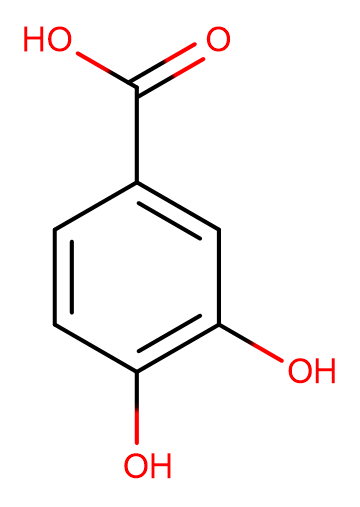
Protocatechuic acid
CAS No. 99-50-3
Protocatechuic acid( NSC 16631 | PCA )
Catalog No. M16912 CAS No. 99-50-3
Protocatechuic acid (PCA) is a dihydroxybenzoic acid, a type of phenolic acid.
Purity : >98% (HPLC)
 COA
Datasheet
HNMR
HPLC
MSDS
Handing Instructions
COA
Datasheet
HNMR
HPLC
MSDS
Handing Instructions
| Size | Price / USD | Stock | Quantity |
| 1 mL x 10 mM in DMSO | 51 | In Stock |


|
| 100MG | Get Quote | In Stock |
|
| 200MG | 45 | In Stock |
|
| 500MG | Get Quote | In Stock |
|
| 1G | Get Quote | In Stock |
|
Biological Information
-
Product NameProtocatechuic acid
-
NoteResearch use only, not for human use.
-
Brief DescriptionProtocatechuic acid (PCA) is a dihydroxybenzoic acid, a type of phenolic acid.
-
DescriptionProtocatechuic acid (PCA) is a dihydroxybenzoic acid, a type of phenolic acid. It is a major metabolite of antioxidant polyphenols found in green tea. It has mixed effects on normal and Y cells in in vitro and in vivo studies.
-
In Vitro——
-
In Vivo——
-
SynonymsNSC 16631 | PCA
-
PathwayOthers
-
TargetOther Targets
-
RecptorOthers
-
Research AreaNeurological Disease
-
Indication——
Chemical Information
-
CAS Number99-50-3
-
Formula Weight154.12
-
Molecular FormulaC7H6O4
-
Purity>98% (HPLC)
-
SolubilityDMSO: 10 mM
-
SMILESOC(=O)C1=CC(O)=C(O)C=C1
-
Chemical Name——
Shipping & Storage Information
-
Storage(-20℃)
-
ShippingWith Ice Pack
-
Stability≥ 2 years
Reference
1. Lv Y, et al. Biotechnol Lett. 2014 Nov; 36(11):2303-10.
molnova catalog



related products
-
Hydrazinium hydroxid...
Hydrazinium hydroxide is a bioactive compound.
-
Sulfopin
Sulfopin is a highly selective covalent inhibitor of Pin1 with an apparent Ki of 17nM. Sulfopin blocks Myc-driven tumors in vivo.
-
Damulin B
Damulin B is a natural product for research related to life sciences.
