


 Cart
Cart
 sales@molnova.com


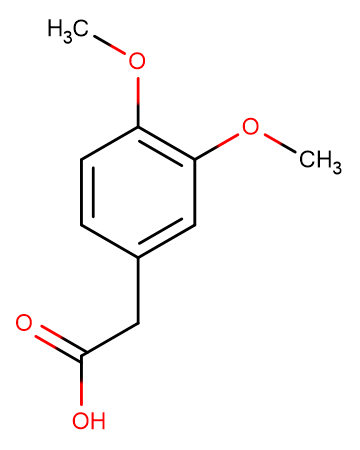
Homoveratrumic acid
CAS No. 93-40-3
Homoveratrumic acid( —— )
Catalog No. M16674 CAS No. 93-40-3
Papaverine intermediate, used to synthesis cardiovascular drugs, such as verapamil, bevantolol, etc.
Purity : >98% (HPLC)
 COA
Datasheet
HNMR
HPLC
MSDS
Handing Instructions
COA
Datasheet
HNMR
HPLC
MSDS
Handing Instructions
| Size | Price / USD | Stock | Quantity |
| 100MG | 37 | In Stock |


|
| 200MG | Get Quote | In Stock |
|
| 500MG | Get Quote | In Stock |
|
| 1G | Get Quote | In Stock |
|
Biological Information
-
Product NameHomoveratrumic acid
-
NoteResearch use only, not for human use.
-
Brief DescriptionPapaverine intermediate, used to synthesis cardiovascular drugs, such as verapamil, bevantolol, etc.
-
DescriptionPapaverine intermediate, used to synthesis cardiovascular drugs, such as verapamil, bevantolol, etc.
-
In Vitro——
-
In Vivo——
-
Synonyms——
-
PathwayOthers
-
TargetOther Targets
-
RecptorOthers
-
Research Area——
-
Indication——
Chemical Information
-
CAS Number93-40-3
-
Formula Weight196.2
-
Molecular FormulaC10H12O4
-
Purity>98% (HPLC)
-
SolubilityDMSO: 10 mM
-
SMILESCOC1=C(OC)C=C(CC(O)=O)C=C1
-
Chemical Name——
Shipping & Storage Information
-
Storage(-20℃)
-
ShippingWith Ice Pack
-
Stability≥ 2 years
Reference
1.Dana M, et al. Molecules. 2011 May 5;16(5):3826-44.
molnova catalog



related products
-
Magrolimab
Magrolimab (Hu5F9-G4) is a humanized anti-CD47 IgG4 monoclonal antibody that exhibits antitumor activity by blocking CD47 and binding primarily to the N-terminal pyroglutamate of CD47. It can be used in combination with other compounds for the treatment of recurrent myeloma.
-
Acebilustat
Acebilustat (CTX-4430, EP-501)?is a potent and selective leukotriene A4 hydrolase (LTA4H) inhibitor with IC50 of 64 nM for inhibition of LTB4 production in human whole blood.
-
Kansuinine E
Kansuinine E, a jatrophane-type diterpenoid, is a plant-derived compound isolated from the roots of E. kansui. It functions as a nitric oxide inhibitor, with an inhibitory concentration of 6.3 μM (IC50).
