


 Cart
Cart
 sales@molnova.com


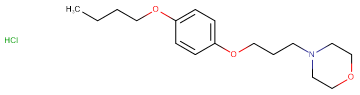
Pramoxine hydrochloride
CAS No. 637-58-1
Pramoxine hydrochloride( —— )
Catalog No. M15419 CAS No. 637-58-1
Pramocaine hydrochloride is a topical anesthetic, and used as an antipruritic.
Purity : >98% (HPLC)
 COA
Datasheet
HNMR
HPLC
MSDS
Handing Instructions
COA
Datasheet
HNMR
HPLC
MSDS
Handing Instructions
| Size | Price / USD | Stock | Quantity |
| 1 mL x 10 mM in DMSO | 28 | In Stock |


|
| 100MG | Get Quote | In Stock |
|
| 200MG | Get Quote | In Stock |
|
| 500MG | Get Quote | In Stock |
|
| 1G | 29 | In Stock |
|
Biological Information
-
Product NamePramoxine hydrochloride
-
NoteResearch use only, not for human use.
-
Brief DescriptionPramocaine hydrochloride is a topical anesthetic, and used as an antipruritic.
-
DescriptionPramocaine hydrochloride is a topical anesthetic, and used as an antipruritic.
-
In Vitro——
-
In Vivo——
-
Synonyms——
-
PathwayMembrane Transporter/Ion Channel
-
TargetSodium Channel
-
RecptorSodium Channel
-
Research AreaNeurological Disease
-
Indication——
Chemical Information
-
CAS Number637-58-1
-
Formula Weight329.86
-
Molecular FormulaC17H27NO3·HCl
-
Purity>98% (HPLC)
-
SolubilityEthanol: 66 mg/mL (200.08 mM); Water: 66 mg/mL (200.08 mM); DMSO: 66 mg/mL (200.08 mM)
-
SMILESCl.CCCCOC1=CC=C(OCCCN2CCOCC2)C=C1
-
Chemical Name——
Shipping & Storage Information
-
Storage(-20℃)
-
ShippingWith Ice Pack
-
Stability≥ 2 years
Reference
1.Ramadan NK, Merey HA. Acta Chim Slov. 2012 Dec; 59(4):870-8.
molnova catalog



related products
-
APETx2
Acid-sensing ion channel 3 (ASIC3) channel blocker (IC50 values are 63 and 175 nM for homomeric rat and human ASIC3 channels). Also inhibits NaV1.8 and NaV1.2 channels (IC50 values are 55 and 114 nM respectively). Demonstrates analgesic properties against acid-induced and inflammatory pain.
-
SB-237376 HCl
SB-237376 HCl (SB-237376 hydrochloride) is a calcium and potassium channel antagonist used in the treatment of cardiac arrhythmias.
-
ProTx II
Selective NaV1.7 channel blocker. Shifts activation gating positively and decreases current magnitude. Displays 100-fold selectivity over other sodium channel subtypes.
