


 Cart
Cart
 sales@molnova.com


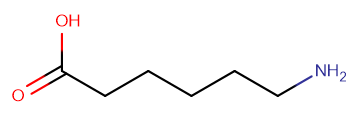
6-Aminocaproic acid
CAS No. 60-32-2
6-Aminocaproic acid( ε-Aminocaproic Acid | EACA | NSC 26154 | NSC 212532 | NSC 400230 )
Catalog No. M15254 CAS No. 60-32-2
6-Aminocaproic acid is an antifibrinolytic agent that acts by inhibiting plasminogen activators which have fibrinolytic properties.
Purity : >98% (HPLC)
 COA
Datasheet
HNMR
HPLC
MSDS
Handing Instructions
COA
Datasheet
HNMR
HPLC
MSDS
Handing Instructions
| Size | Price / USD | Stock | Quantity |
| 50MG | 29 | In Stock |


|
| 100MG | 45 | In Stock |
|
| 200MG | Get Quote | In Stock |
|
| 500MG | 68 | In Stock |
|
| 1G | 88 | In Stock |
|
Biological Information
-
Product Name6-Aminocaproic acid
-
NoteResearch use only, not for human use.
-
Brief Description6-Aminocaproic acid is an antifibrinolytic agent that acts by inhibiting plasminogen activators which have fibrinolytic properties.
-
Description6-Aminocaproic acid is an antifibrinolytic agent that acts by inhibiting plasminogen activators which have fibrinolytic properties.(In Vitro):6-Aminocaproic acid (20-180 μg/mL) inhibits fibrinolysis in plasma of Asian elephants, with an effective concentration of 61.5 μg/mL.6-Aminocaproic acid can be used as a hydrophobic linker to improve near-infrared fluorescence imaging and photothermal cancer therapy of PEGylated indocyanine green.(In Vivo):6-Aminocaproic acid (20-100 mg/kg; a single p.o.) inhibits fibrinolysis at all doses tested in dogs.6-Aminocaproic acid (20-100 mg/kg; a single p.o.) is rapidly absorbed (Tmax=1 h) and eliminated rapidly in dogs.
-
In Vitro6-Aminocaproic acid (20-180 μg/mL) inhibits fibrinolysis in plasma of Asian elephants, with an effective concentration of 61.5 μg/mL.6-Aminocaproic acid can be used as a hydrophobic linker to improve near-infrared fluorescence imaging and photothermal cancer therapy of PEGylated indocyanine green.
-
In Vivo6-Aminocaproic acid (20-100 mg/kg; a single p.o.) inhibits fibrinolysis at all doses tested in dogs.6-Aminocaproic acid (20-100 mg/kg; a single p.o.) is rapidly absorbed (Tmax=1 h) and eliminated rapidly in dogs.
-
Synonymsε-Aminocaproic Acid | EACA | NSC 26154 | NSC 212532 | NSC 400230
-
PathwayOthers
-
TargetOther Targets
-
RecptorPlasminogen
-
Research AreaMetabolic Disease
-
Indication——
Chemical Information
-
CAS Number60-32-2
-
Formula Weight131.18
-
Molecular FormulaC6H13NO2
-
Purity>98% (HPLC)
-
SolubilityEthanol: 1 mg/mL (7.62 mM); Water: 26 mg/mL (198.21 mM); DMSO: 6 mg/mL (45.74 mM)
-
SMILESO=C(O)CCCCCN
-
Chemical NameAminocaproic acid
Shipping & Storage Information
-
Storage(-20℃)
-
ShippingWith Ice Pack
-
Stability≥ 2 years
Reference
1.Mochalkin I, et al. Biochemistry. 1999 Feb 16;38(7):1990-8.
molnova catalog



related products
-
RR-11a analog
RR-11a analog is a potent and selective asparaginyl endopeptidases (AE) (Legumain) inhibitors(IC50 values of 4.5 nM, 4.5 nM and 31 nM for AE1 in Trichomonas Vaginalis, AE in Ixodes ricinus and AE in Schistosoma mansoni, respectively).
-
alpha-Costic acid
α-Costic acid, a plant sesquiterpene with acaricidal activity against Varroa destructor.
-
Monolaurin
Monolaurin is a surfactant and emulsifer found in coconut oil.?It inhibitis growth of Staphylococcus Streptococcus Gardnerella Candida and Haemophilus and decreases production of pro-inflammatory cytokines.
