


 Cart
Cart
 sales@molnova.com


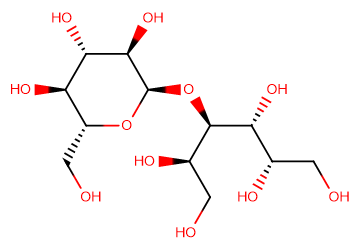
Maltitol
CAS No. 585-88-6
Maltitol( —— )
Catalog No. M15155 CAS No. 585-88-6
Maltitol is a sugar alcohol (a polyol) used as a sugar substitute.
Purity : >98% (HPLC)
 COA
Datasheet
HNMR
HPLC
MSDS
Handing Instructions
COA
Datasheet
HNMR
HPLC
MSDS
Handing Instructions
| Size | Price / USD | Stock | Quantity |
| 100MG | Get Quote | In Stock |


|
| 200MG | Get Quote | In Stock |
|
| 500MG | Get Quote | In Stock |
|
| 1G | 35 | In Stock |
|
Biological Information
-
Product NameMaltitol
-
NoteResearch use only, not for human use.
-
Brief DescriptionMaltitol is a sugar alcohol (a polyol) used as a sugar substitute.
-
DescriptionMaltitol is a sugar alcohol (a polyol) used as a sugar substitute. It has 75–90% of the sweetness of sucrose (table sugar) and nearly identical properties, except for browning.
-
In Vitro——
-
In Vivo——
-
Synonyms——
-
PathwayOthers
-
TargetOther Targets
-
RecptorOthers
-
Research Area——
-
Indication——
Chemical Information
-
CAS Number585-88-6
-
Formula Weight344.31
-
Molecular FormulaC12H24O11
-
Purity>98% (HPLC)
-
SolubilitySoluble in Water
-
SMILESC([C@@H]1[C@H]([C@@H]([C@H]([C@H](O1)O[C@H]([C@@H](CO)O)[C@@H]([C@H](CO)O)O)O)O)O)O
-
Chemical Name——
Shipping & Storage Information
-
Storage(-20℃)
-
ShippingWith Ice Pack
-
Stability≥ 2 years
Reference
1.Urushima H, et al. J Med Food. 2015 Oct;18(10):1081-7.
molnova catalog



related products
-
Cap-dependent endonu...
Cap-dependent endonuclease-IN-1 is a highly potent, orally active cap-dependent endonuclease inhibitor with antiviral activity for studying influenza virus infection.
-
TDRL-551
TDRL-551 is a novel and potent replication protein A (RPA) inhibitor (IC50=18 μM) with potential anticancer activity.
-
Acetylatractylodinol
Acetylatractylodinol is a natural product isolated from Atractylodes lancea, possesses antioxidant activity.
