


 Cart
Cart
 sales@molnova.com


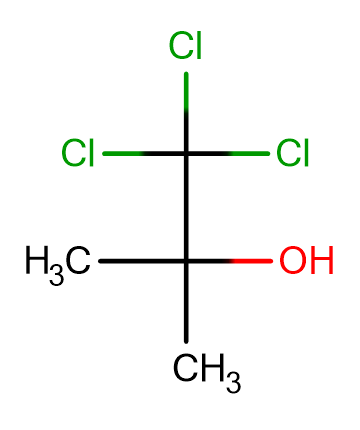
Chlorobutanol
CAS No. 57-15-8
Chlorobutanol( Chlorobutanol | Acetochlorone | Chlortran | Methaform )
Catalog No. M15086 CAS No. 57-15-8
Chlorobutanol is a chemical preservative, sedative hypnotic and weak local anaesthetic similar in nature to chloral hydrate.
Purity : >98% (HPLC)
 COA
Datasheet
HNMR
HPLC
MSDS
Handing Instructions
COA
Datasheet
HNMR
HPLC
MSDS
Handing Instructions
| Size | Price / USD | Stock | Quantity |
| 1 mL x 10 mM in DMSO | 41 | In Stock |


|
| 50MG | 27 | In Stock |
|
| 100MG | 35 | In Stock |
|
| 200MG | 50 | In Stock |
|
| 500MG | 87 | In Stock |
|
| 1G | 115 | In Stock |
|
Biological Information
-
Product NameChlorobutanol
-
NoteResearch use only, not for human use.
-
Brief DescriptionChlorobutanol is a chemical preservative, sedative hypnotic and weak local anaesthetic similar in nature to chloral hydrate.
-
DescriptionChlorobutanol is a chemical preservative, sedative hypnotic and weak local anaesthetic similar in nature to chloral hydrate. It has antibacterial and antifungal properties. Chlorobutanol is typically used at a concentration of 0.5% where it lends long term stability to multi-ingredient formulations.
-
In Vitro——
-
In Vivo——
-
SynonymsChlorobutanol | Acetochlorone | Chlortran | Methaform
-
PathwayOthers
-
TargetOther Targets
-
RecptorOthers
-
Research Area——
-
Indication——
Chemical Information
-
CAS Number57-15-8
-
Formula Weight177.45
-
Molecular FormulaC4H7ClO
-
Purity>98% (HPLC)
-
SolubilitySoluble in DMSO
-
SMILESCC(O)(C)C(Cl)(Cl)Cl
-
Chemical Name2-Propanol, 1,1,1-trichloro-2-methyl-
Shipping & Storage Information
-
Storage(-20℃)
-
ShippingWith Ice Pack
-
Stability≥ 2 years
Reference
1.Chen SL, et al. Thromb Haemost. 1990 Nov 30;64(3):473-7.
molnova catalog



related products
-
Isoviolanthin
Isoviolanthin reduces the migratory and invasive capacities of TGF-β1-treated HCC cells but exhibits no cytotoxic effects on normal live cells, and has potential as a therapeutic agent for the treatment of advanced-stage metastatic HCC.
-
NY-BR-1 p904 A2
T-cell clones specific for this NY-BR-1 epitope (p904) can recognize breast tumor cells expressing NY-BR-1.
-
(Nle8·18,Tyr34)-pTH ...
(Nle8,18,Tyr34)-pTH (1-34) (human) is a polypeptide that can be found by peptide screening. Peptide screening is a research tool that pools active peptides primarily by immunoassay. Peptide screening can be used for protein interaction, functional analysis, epitope screening, especially in the field of agent research and development.
