


 Cart
 sales@molnova.com


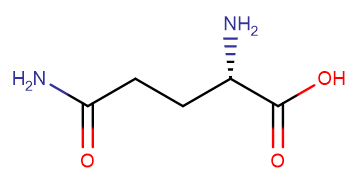
L-Glutamine
CAS No. 56-85-9
L-Glutamine( (+)-Glutamine | (S)-2,5-Diamino-5-Oxopentanoic Acid | NSC 27421 )
Catalog No. M15070 CAS No. 56-85-9
L-glutamine is a non-essential amino acid present abundantly throughout the body and is involved in many metabolic processes.
Purity : >98% (HPLC)
 COA
Datasheet
HNMR
HPLC
MSDS
Handing Instructions
| Size | Price / USD | Stock | Quantity |
| 100MG | Get Quote | In Stock |


|
| 200MG | Get Quote | In Stock |
|
| 500MG | Get Quote | In Stock |
|
| 1G | Get Quote | In Stock |
|
Biological Information
-
Product NameL-Glutamine
-
NoteResearch use only, not for human use.
-
Brief DescriptionL-glutamine is a non-essential amino acid present abundantly throughout the body and is involved in many metabolic processes.
-
DescriptionL-glutamine is a non-essential amino acid present abundantly throughout the body and is involved in many metabolic processes. It is synthesized from GLUTAMIC ACID and AMMONIA. It is the principal carrier of NITROGEN in the body and is an important energy source for many cells.
-
In Vitro——
-
In Vivo——
-
Synonyms(+)-Glutamine | (S)-2,5-Diamino-5-Oxopentanoic Acid | NSC 27421
-
PathwayOthers
-
TargetOther Targets
-
RecptorCTP synthase 1
-
Research AreaMetabolic Disease
-
Indication——
Chemical Information
-
CAS Number56-85-9
-
Formula Weight146.14
-
Molecular FormulaC5H10N2O3
-
Purity>98% (HPLC)
-
SolubilityWater: 29 mg/mL (198.43 mM)
-
SMILESN[C@@H](CCC(N)=O)C(O)=O
-
Chemical NameL-glutamine
Shipping & Storage Information
-
Storage(-20℃)
-
ShippingWith Ice Pack
-
Stability≥ 2 years
Reference
1.Mong JA, Blutstein T. Neuroscience. 2006; 138(3):967-75.
molnova catalog


related products
-
β-D-Glucan
β-D-Glucan is a compound that targets tumor-associated macrophages with antitumor activity and modulates the immune response in necrotizing pancreatitis.
-
AGI-43192
AGI-43192 is a potent methionine adenosine transferase 2A (MAT2A) inhibitor that penetrates the blood-brain barrier.
-
Cortagine
Potent and selective corticotrophin releasing factor receptor 1 (CRF1) agonist (EC50 = 0.18 nM for rat CRF1). Displays anxiolytic and antidepressant activity in vivo. Microinfusion into mouse prefrontal cortex reduces defensive behavior in vivo.
