


 Cart
Cart
 sales@molnova.com


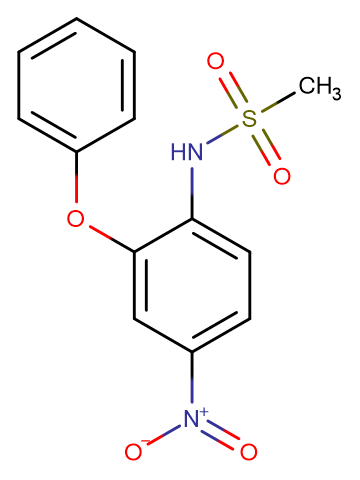
Nimesulide
CAS No. 51803-78-2
Nimesulide( R805 )
Catalog No. M14806 CAS No. 51803-78-2
Nimesulide is a relatively COX-2 selective, non-steroidal anti-inflammatory drug (NSAID) with analgesic and antipyretic properties.
Purity : >98% (HPLC)
 COA
Datasheet
HNMR
HPLC
MSDS
Handing Instructions
COA
Datasheet
HNMR
HPLC
MSDS
Handing Instructions
| Size | Price / USD | Stock | Quantity |
| 1 mL x 10 mM in DMSO | 46 | In Stock |


|
| 25MG | 29 | In Stock |
|
| 50MG | 35 | In Stock |
|
| 100MG | 47 | In Stock |
|
| 200MG | 56 | In Stock |
|
| 500MG | Get Quote | In Stock |
|
| 1G | Get Quote | In Stock |
|
Biological Information
-
Product NameNimesulide
-
NoteResearch use only, not for human use.
-
Brief DescriptionNimesulide is a relatively COX-2 selective, non-steroidal anti-inflammatory drug (NSAID) with analgesic and antipyretic properties.
-
DescriptionNimesulide is a relatively COX-2 selective, non-steroidal anti-inflammatory drug (NSAID) with analgesic and antipyretic properties. Its approved indications are the treatment of acute pain, the symptomatic treatment of osteoarthritis and primary dysmenorrhoea in adolescents and adults above 12 years old. Due to concerns about the risk of hepatotoxicity, nimesulide has been withdrawn from market in many countries.(In Vitro):Nimesulide is a selective COX-2 inhibitor, with IC50s of 70 nM-70 μM in a time-dependent manner, but it shows weak effect on COX-1 (IC50 >100 μM). Nimesulide (10 μM) effectively decreases VEGF in endometrium cancer cells, and shows no effect on that in normal cells. Nimesulide (10 and 50 μM) dramatically decreases MCP-1 levels in normal cell, and such an effect is also observed with 10 μM in cancer cells. In addition, Nimesulide (50 μM) potently affects IL-8 level in normal cells, but causes no changes in cancer cells.(In Vivo):Nimesulide (3 and 10 mg/kg, i.p.) effectively blocks fever induced by i.p. injection of LPS in rats. Nimesulide (3 mg/kg, i.p.) potently reduces fever response induced by IL-1β, IL-6 or TNF-α, but does not prevent the initial rise in the febrile response induced by arachidonic acid. Nimesulide also significantly reduces PGE2 levels and PGF2α levels in the cerebrospinal fluid of the LPS-stimulated animals, and inhibits the increase in plasma TNF-α by 97%.
-
In VitroNimesulide is a selective COX-2 inhibitor, with IC50s of 70 nM-70 μM in a time-dependent manner, but it shows weak effect on COX-1 (IC50 >100 μM). Nimesulide (10 μM) effectively decreases VEGF in endometrium cancer cells, and shows no effect on that in normal cells. Nimesulide (10 and 50 μM) dramatically decreases MCP-1 levels in normal cell, and such an effect is also observed with 10 μM in cancer cells. In addition, Nimesulide (50 μM) potently affects IL-8 level in normal cells, but causes no changes in cancer cells.
-
In VivoNimesulide (3 and 10 mg/kg, i.p.) effectively blocks fever induced by i.p. injection of LPS in rats. Nimesulide (3 mg/kg, i.p.) potently reduces fever response induced by IL-1β, IL-6 or TNF-α, but does not prevent the initial rise in the febrile response induced by arachidonic acid. Nimesulide also significantly reduces PGE2 levels and PGF2α levels in the cerebrospinal fluid of the LPS-stimulated animals, and inhibits the increase in plasma TNF-α by 97%.
-
SynonymsR805
-
PathwayChromatin/Epigenetic
-
TargetCOX
-
RecptorCOX-2
-
Research AreaInflammation/Immunology
-
Indication——
Chemical Information
-
CAS Number51803-78-2
-
Formula Weight308.31
-
Molecular FormulaC13H12N2O5S
-
Purity>98% (HPLC)
-
SolubilityDMSO: 62 mg/mL (201.09 mM)
-
SMILESCS(=O)(NC1=CC=C([N+]([O-])=O)C=C1OC2=CC=CC=C2)=O
-
Chemical NameN-(4-Nitro-2-phenoxyphenyl)methanesulfonamide
Shipping & Storage Information
-
Storage(-20℃)
-
ShippingWith Ice Pack
-
Stability≥ 2 years
Reference
1.Rainsford KD. Curr Med Res Opin. 2006 Jun;22(6):1161-70.
molnova catalog



related products
-
Niflumic acid
Niflumic acid, a Ca2+-activated Cl- channel blocker, is an analgesic and anti-inflammatory agent used in the treatment of rheumatoid arthritis.
-
Thonzylamine
Thonzylamine is an antihistamine and anticholinergic drug. It is available as combination products with Clofedanol or Phenylephrine for temporary relief of symptoms of common cold, hay fever (allergic rhinitis) or other upper respiratory allergies.
-
Zaltoprofen
Zaltoprofen is an inhibitor of Cox-1 and Cox-2 for treatment of arthritis.
