


 Cart
Cart
 sales@molnova.com


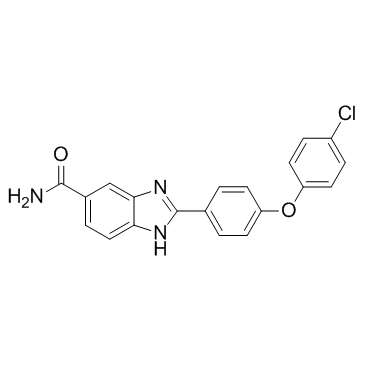
BML-277
CAS No. 516480-79-8
BML-277( BML-277 | C 3742 | Checkpoint Kinase 2 Inhibitor II )
Catalog No. M14798 CAS No. 516480-79-8
BML-277 (C 3742) is a selective Chk2 (checkpoint kinase 2) inhibitor with an IC50 of 15 nM.
Purity : >98% (HPLC)
 COA
Datasheet
HNMR
HPLC
MSDS
Handing Instructions
COA
Datasheet
HNMR
HPLC
MSDS
Handing Instructions
| Size | Price / USD | Stock | Quantity |
| 1 mL x 10 mM in DMSO | 49 | In Stock |


|
| 2MG | 29 | In Stock |
|
| 5MG | 45 | In Stock |
|
| 10MG | 73 | In Stock |
|
| 25MG | 151 | In Stock |
|
| 50MG | 259 | In Stock |
|
| 100MG | 368 | In Stock |
|
| 200MG | 538 | In Stock |
|
| 500MG | Get Quote | In Stock |
|
| 1G | Get Quote | In Stock |
|
Biological Information
-
Product NameBML-277
-
NoteResearch use only, not for human use.
-
Brief DescriptionBML-277 (C 3742) is a selective Chk2 (checkpoint kinase 2) inhibitor with an IC50 of 15 nM.
-
DescriptionBML-277 (C 3742) is a selective Chk2 (checkpoint kinase 2) inhibitor with an IC50 of 15 nM.
-
In Vitro——
-
In Vivo——
-
SynonymsBML-277 | C 3742 | Checkpoint Kinase 2 Inhibitor II
-
PathwayAngiogenesis
-
TargetChk
-
RecptorChk2
-
Research AreaCancer
-
Indication——
Chemical Information
-
CAS Number516480-79-8
-
Formula Weight363.8
-
Molecular FormulaC20H14ClN3O2
-
Purity>98% (HPLC)
-
SolubilityDMSO: 10 mM
-
SMILESO=C(C1=CC=C2C(N=C(C3=CC=C(OC4=CC=C(Cl)C=C4)C=C3)N2)=C1)N
-
Chemical Name2-(4-(4-Chlorophenoxy)phenyl)-1H-benzimidazole-5-carboxamide
Shipping & Storage Information
-
Storage(-20℃)
-
ShippingWith Ice Pack
-
Stability≥ 2 years
Reference
1. Arienti KL, et al. J Med Chem. 2005 Mar 24; 48(6): 1873-85.
molnova catalog



related products
-
XL-844
A potent, specific, orally available, ATP?competitive inhibitor of Chk1 and Chk2 with Ki of 2.2 nM and 0.07 nM, respectively.
-
CCT241533
A potent and selective ATP-competitive inhibitor of CHK2 K5777:N5777with IC50 of 3 nM.
-
PD-321852
A potent, reasonably selective Chk1 inhibitor with cell IC50 of 5 nM.
