


 Cart
Cart
 sales@molnova.com


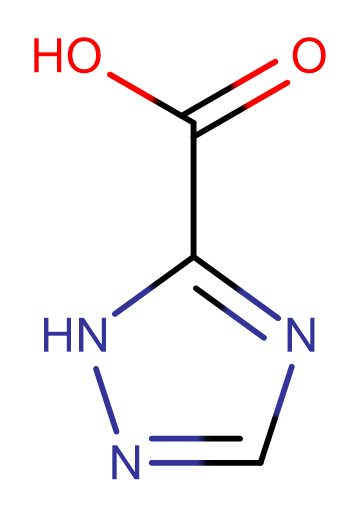
1H-1,2,4-Triazole-3-carboxylic acid
CAS No. 4928-87-4
1H-1,2,4-Triazole-3-carboxylic acid( —— )
Catalog No. M14652 CAS No. 4928-87-4
It has been granted the patent to have property to Inhibit protein isoprenyl transferases.
Purity : >98% (HPLC)
 COA
Datasheet
HNMR
HPLC
MSDS
Handing Instructions
COA
Datasheet
HNMR
HPLC
MSDS
Handing Instructions
| Size | Price / USD | Stock | Quantity |
| 1 mL x 10 mM in DMSO | 28 | In Stock |


|
| 100MG | Get Quote | In Stock |
|
| 200MG | Get Quote | In Stock |
|
| 500MG | Get Quote | In Stock |
|
| 1G | 27 | In Stock |
|
Biological Information
-
Product Name1H-1,2,4-Triazole-3-carboxylic acid
-
NoteResearch use only, not for human use.
-
Brief DescriptionIt has been granted the patent to have property to Inhibit protein isoprenyl transferases.
-
DescriptionIt has been granted the patent to have property to Inhibit protein isoprenyl transferases.
-
In Vitro——
-
In Vivo——
-
Synonyms——
-
PathwayOthers
-
TargetOther Targets
-
Recptorisoprenyl transferases
-
Research Area——
-
Indication——
Chemical Information
-
CAS Number4928-87-4
-
Formula Weight113.07
-
Molecular FormulaC3H3N3O2
-
Purity>98% (HPLC)
-
SolubilityLimited solubility
-
SMILESOC(=O)C1=NC=NN1
-
Chemical Name——
Shipping & Storage Information
-
Storage(-20℃)
-
ShippingWith Ice Pack
-
Stability≥ 2 years
Reference
1.patent: US6221865
molnova catalog



related products
-
6-Methoxyflavanone
6-Methoxyflavanone (6-MeOF) is A positive allosteric modulator of the GABA response of human recombinant GABA A receptor, with antianxiety and anti-inflammatory activity, and can be used to reduce cisplatin induced neuropathic pain.
-
STC-15
STC-15 (example 70) is an orally active METTL3 inhibitor used in the study of proliferative diseases such as cancer and autoimmune diseases.
-
Methyl indole-3-acet...
Indole-3-methyl acetate is found in apple. It is isolated from immature seeds of beach pea (Lathyrus maritimus) Vicia amurensis wild soybean (Glycine soja) lobiya (Vigna catiang var. sinensis) and hyacinth bean (Dolichos lablab).
